Having enough produce does not mean you can fill the order

A warehouse holds 600 kilograms of produce and receives an order for 400. It sounds straightforward until the buyer’s grade, pack format and delivery window are considered. Fresh produce inventory management needs to show which stock can meet that particular order. A total weight is only the first part of the answer.
Available stock depends on the order’s specification as well as its weight. Preserve origin and quantity through every grade change and repack.
- 01Receive the lotOrigin, quantity and inspection
- 02Grade and repackLink every output and recorded loss
- 03Check the orderGrade, condition, pack and receipt windowDoes the lot meet the specification?YesAllocate to the orderNoFind another lot or obtain an explicit customer agreement; retain the original requirement.
- 04Allocate and deliverPreserve the lot and shipment history
GS1’s produce guideline informs the traceability context; this allocation workflow is an editorial proposal. Diagram: NextEdge Labs.
Follow one receiving lot through the packhouse
Take an illustrative 600 kg receiving lot. Sorting produces 360 kg in one commercial grade, 180 kg in another, 40 kg rejected and 20 kg still awaiting assessment. The quantities reconcile, but only part of the receipt is available for a customer requiring the first grade.
Keep the receiving identity, supplier, origin information and inspection record linked to each output. Distinguish a supplier’s declared value from an observation made at receipt. If a quantity is corrected, retain the earlier entry and the reason.
GS1’s Fresh Fruit and Vegetable Traceability Guideline explicitly addresses the connection between repacked products and their inputs. Its packer and repacker guidance is a more useful reference here than a generic barcode feature list.
Source: GS1 · Sections 3.2.1 and 4.6: traceability principles and packer/repacker guidance. Reference details
Condition is an observation made at a particular time
Grade and condition may be reassessed while stock is held. Record when the observation was made, who made it and which lot or container it applies to. Overwriting the previous assessment removes the history needed to understand a rejected allocation.
Use a vocabulary agreed by the commercial and operational teams. A field called ‘good’ is too ambiguous if purchasing, the packhouse and sales interpret it differently. Commodity-specific attributes can sit alongside common lot and quantity records without forcing every product into identical fields.
FAO describes the role of temperature control in limiting food loss along the supply chain. For this application, connect handling and storage records to the relevant product and period. A reading with no dependable lot or location relationship offers little help during an investigation.
Source: Food and Agriculture Organization of the United Nations (FAO) · Opening discussion of temperature control across the food supply chain. Reference details
Allocate to the buyer’s actual requirement
Record the agreed grade, pack format, quantity and receipt window on the order. Explain why a lot qualifies or does not qualify. The oldest stock may deserve attention, but age alone cannot establish that it meets the customer’s specification.
When a buyer accepts an alternative grade, attach that agreement to the order. Keep the original request available. Changing the item description afterwards may make the paperwork look consistent while concealing a recurring procurement or allocation problem.
Reassess an allocation when the route or dispatch date changes. Sales and transport need a shared shipment reference so the team promising the product can see a delay before the vehicle reaches the customer.
Evaluate grading technology against the decision it will support
Image-assisted grading is worth considering only when the business has a defined visual assessment and representative examples. Test the proposed tool with the cameras, lighting and product variation it will encounter. Review disagreements by category rather than relying on one overall accuracy figure.
Keep the limits clear. A visible surface characteristic and a food-safety assessment are different questions. The application should route uncertain observations to the appropriate reviewer and should not infer qualities an image cannot establish.
A simpler first improvement may be searchable inspection records or structured supplier documents. Choose the work that removes a real bottleneck instead of adding an image model to an already unclear grading process.
Ask the supplier to correct a repack
During a software evaluation, receive one commodity, split it into grades, repack part of it and allocate it to two customers. Then correct one quantity. Check whether the application can still explain the origin of each output and reconcile input, output, loss and remaining stock.
Inspect how those records can be exported. An investigation should not depend on asking the vendor to reconstruct the relationships. Inventory and traceability are connected parts of the same buying decision: one tells the team what can be supplied, the other explains where it came from.
Sources and further reading
Sources checked 15 October 2026. The worked examples and software evaluation suggestions are NextEdge Labs’ editorial analysis.
- Fresh Fruit and Vegetable Traceability GuidelineGS1 · Release 2.0, February 2021
Produce-specific guidance, including links between repacked products and their inputs.
- From farm to fork: how to keep food fresh and healthy, sustainablyFood and Agriculture Organization of the United Nations (FAO) · 12 June 2026
Background on temperature control and food loss. No savings forecast or product-specific safety threshold is inferred from this article.
Visual credits
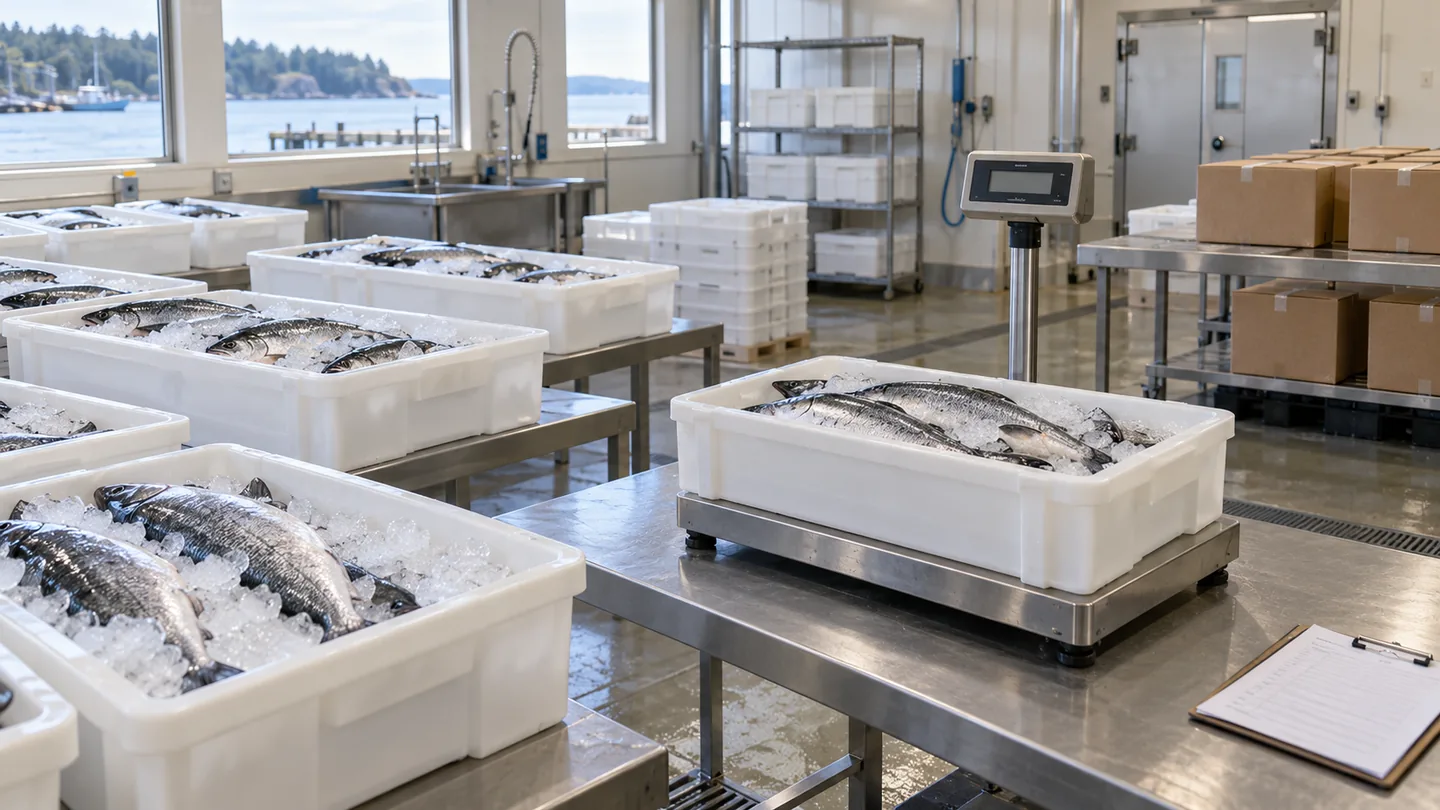
AI-generated illustration created for NextEdge Labs; it does not depict a client facility. Workflow diagram by NextEdge Labs. Icons from Lucide (ISC licence).