A cold-chain alert needs a shipment and an owner

A temperature alert arrives. The sensor is known, but it was moved between vehicles earlier in the day. Which shipment needs attention? Until the assignment history is clear, more readings will not resolve the question. A cold chain monitoring system needs to connect measurements to the product journey and to the people responsible for responding.
A monitoring system is useful when the team can identify the affected shipment, assess the evidence and record what happened next.
- 01Assign the deviceShipment, location and start/end times
- 02Receive the readingsMeasurement time, upload time and gaps
- 03Review the signalApply the team’s product-specific rulesIs there an excursion or data gap?YesAssign an owner to assess it firstNoContinue monitoring and retain the readings through delivery.
- 04Record the outcomeEvidence, decision and delivery acceptance
Monitoring supports the qualified team’s assessment; the diagram sets no safety thresholds. Diagram: NextEdge Labs.
Keep the device assignment as a history
Record which device monitored which vehicle, container or storage area, and the time each assignment began and ended. Preserve earlier assignments when a sensor is reused. Otherwise, opening its current record can make yesterday’s readings appear to belong to today’s load.
Keep the original measurement time separate from the time the platform received it. A reading uploaded after a connection returns is historical evidence, not a live status. Make missing periods visible rather than drawing an apparently normal line across a gap.
FAO describes temperature control as an important part of preserving food along the supply chain. For monitoring software, the practical implication is that the product, place and time associated with a reading matter as much as the reading itself.
Source: Food and Agriculture Organization of the United Nations (FAO) · Opening discussion of the cold chain and temperature control. Reference details
Decide what an alert is asking someone to do
Quality and operations should agree product-specific rules, responsibility and escalation. The software can implement those decisions. It should not invent a universal temperature limit for unrelated products or assume that acknowledging an alert resolves it.
An actionable case needs a shipment reference, the relevant readings, an owner and a next step. That step may be to investigate missing data, contact a carrier or hold a delivery for assessment. Keep the original evidence and the subsequent decisions together.
Also define who takes over when the original owner is unavailable. An alert sent to several inboxes can remain unowned even though every recipient has seen it. Use explicit assignment and escalation based on the operating procedure.
A late vehicle can change an otherwise valid allocation
A lot may meet its dispatch conditions but no longer meet a customer’s agreed remaining shelf life after a delay. Link the route, order and inventory allocation through a shared shipment reference. When the plan changes, the allocation needs to be reassessed by the responsible team.
Show the reason for selecting or excluding a lot. If the customer accepts a revised arrangement, preserve the agreement with the shipment. Warehouse staff should not have to reconstruct a transport decision from a series of messages.
Keep delivery acceptance separate from the vehicle arriving
Arrival, unloading and acceptance are different events. Record the quantity accepted, any rejected quantity and the evidence available at receipt. A partial rejection should not turn the entire delivery into either a success or a failure.
Link a return or claim to the original shipment, lots and monitoring period. This lets customer service, transport and quality work from the same record. A summary tool may help organise the evidence, but an incomplete record should not trigger an automatic safety decision, assignment of liability or claim settlement.
Evaluate the device and the workflow together
Cold-chain monitoring devices capture measurements. The complete system also depends on assignment, connectivity, calibration ownership, replacement and support. Discuss those responsibilities during selection, including what happens when a device fails on a journey.
A low purchase price can be misleading if staff must manually match readings to shipments. Include integration, recurring connectivity charges and operational support in the comparison. Ask how raw readings and decisions can be exported if the service changes.
Use a route rehearsal to expose the gaps
On representative journeys, test the events below using the agreed operating procedures. Judge the system by whether the team can resolve the case with the available evidence.
- A device loses its connection and uploads readings later.
- A sensor is reassigned while its earlier history is still needed.
- A delay changes the customer’s expected receipt time.
- The customer accepts part of a delivery and disputes the rest.
- An alert owner is unavailable and another person must take responsibility.
Sources and further reading
Sources checked 15 October 2026. The worked examples and software evaluation suggestions are NextEdge Labs’ editorial analysis.
- From farm to fork: how to keep food fresh and healthy, sustainablyFood and Agriculture Organization of the United Nations (FAO) · 12 June 2026
Background on temperature control and food loss. No savings forecast or product-specific safety threshold is inferred from this article.
Visual credits
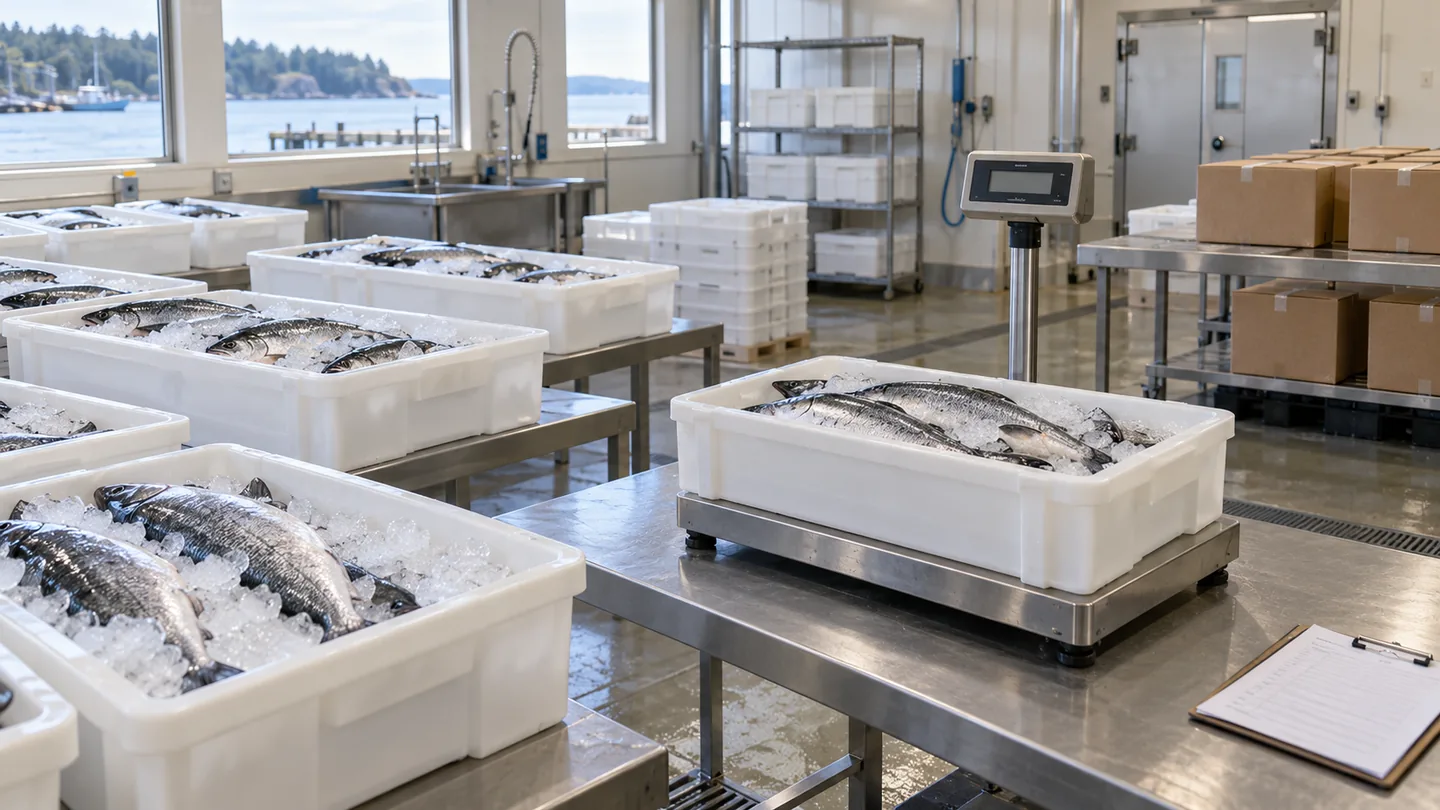
AI-generated illustration created for NextEdge Labs; it does not depict a client facility. Workflow diagram by NextEdge Labs. Icons from Lucide (ISC licence).