Why restaurant stock reports disagree across outlets

Head office sees unusually high ingredient consumption at one restaurant. The outlet manager says the report is wrong. Before treating the difference as waste, check whether both sides are using the same unit, recipe and closing time. Restaurant inventory management across several outlets depends on those definitions as much as on the software collecting them.
A variance is a question to investigate. It becomes useful when the manager can trace it to purchases, counts, recipes and sales.
- 01Count and receiveOpening stock, receipts and transfers
- 02Map the salesRecipes, modifiers and cancellations
- 03Reconcile the closeClosing count and recorded non-sales useIs there an unexplained difference?YesInvestigate first, then approveNoThe account can move to approval; retain the supporting records.
- 04Approve the accountUse explained quantities for purchasing
A variance identifies a question. It does not establish waste, theft or poor portion control. Diagram: NextEdge Labs.
Work through one ingredient before comparing the group
Here is a simplified example for an ingredient measured in kilograms. Stock depletion includes everything that left usable stock during the period. Recipe-based consumption estimates what recorded sales should have used. They answer different questions.
| Record | Quantity |
|---|---|
| Opening stock | 10 kg |
| Receipts | +15 kg |
| Closing stock | −8 kg |
| Stock depletion (no transfers in this example) | 17 kg |
| Expected consumption from sales and recipes | 14 kg |
| Recorded waste | 1 kg |
| Remaining unexplained difference | 2 kg |
Find the cause before approving the adjustment
The two unexplained kilograms could reflect a late receipt, staff meals, a count error or a recipe mapping problem. The number alone does not establish misconduct or poor portion control. Let the manager inspect the source transactions and classify the cause with supporting evidence.
Agree the cutoff used for sales, purchases and counts. An invoice entered the following morning may belong to yesterday’s receipt. If one report follows entry time and another follows the physical event, the apparent variance can move between days without anything changing in the kitchen.
Corrections should preserve the earlier record and show which reports changed. FSSAI’s 2017 catering guide discusses traceable amendments and record responsibilities in section 7.2. For software design, that supports keeping the original event available alongside the correction.
Source: Food Safety and Standards Authority of India (FSSAI) · Section 7.2, printed page 40: documentation and records. Reference details
POS mapping is part of the inventory job
A menu item is not always a fixed recipe. Size choices, extra toppings, bundles, refunds and cancellations can change expected ingredient usage. Map those events deliberately. An unmapped modifier should appear for review rather than vanish from the calculation.
Maintain shared ingredient identities and approved purchase conversions across outlets. Retain the supplier’s original description for matching and investigation. If a new invoice line automatically creates a new ingredient, a single product can gradually acquire several names in the group’s reports.
Recipe versions also need an effective period and, where relevant, an outlet. A local menu variation should be visible. Forcing it into the standard recipe produces comparable-looking numbers that describe different operations.
Make the count practical during service
Decide which ingredients justify frequent counts and which can follow a longer cycle. A mobile screen should let staff save an incomplete count and identify what remains. Asking for a full inventory during peak service is unlikely to produce dependable data.
Transfers need a sending record and receiving confirmation. If the receiving outlet records less, assign the discrepancy instead of changing the dispatch to match. Keep waste, staff meals and administrative corrections distinct so managers can act on the right cause.
Replenishment suggestions can follow once these records are dependable. Show the available stock, expected demand, supplier lead time and outstanding transfers behind a suggested order. Managers need to recognise a stale assumption before it becomes a purchase.
When a spreadsheet stops earning its keep
A controlled spreadsheet can work for a small operation with stable definitions and one accountable owner. Software becomes more compelling when simultaneous edits, repeated imports, outlet permissions or missing approvals consume the manager’s time.
Before migrating, reconcile ingredient names, units and opening balances. Run a comparison period using a defined cutoff and the same source transactions. Investigate differences before rolling out to the rest of the group. Otherwise, the new system simply reproduces the old argument in a more expensive format.
Choose trial outlets that expose meaningful differences in menu or volume. Judge the release by count completion, unresolved variance and time spent closing the day. Group-wide averages should come after outlet managers can explain their own numbers.
Sources and further reading
Sources checked 15 October 2026. The worked examples and software evaluation suggestions are NextEdge Labs’ editorial analysis.
- Food Industry Guide: CateringFood Safety and Standards Authority of India (FSSAI) · First edition, October 2017
Dated operational guidance, not a statement of current legal requirements. The document itself says that applicable regulations take precedence.
Visual credits
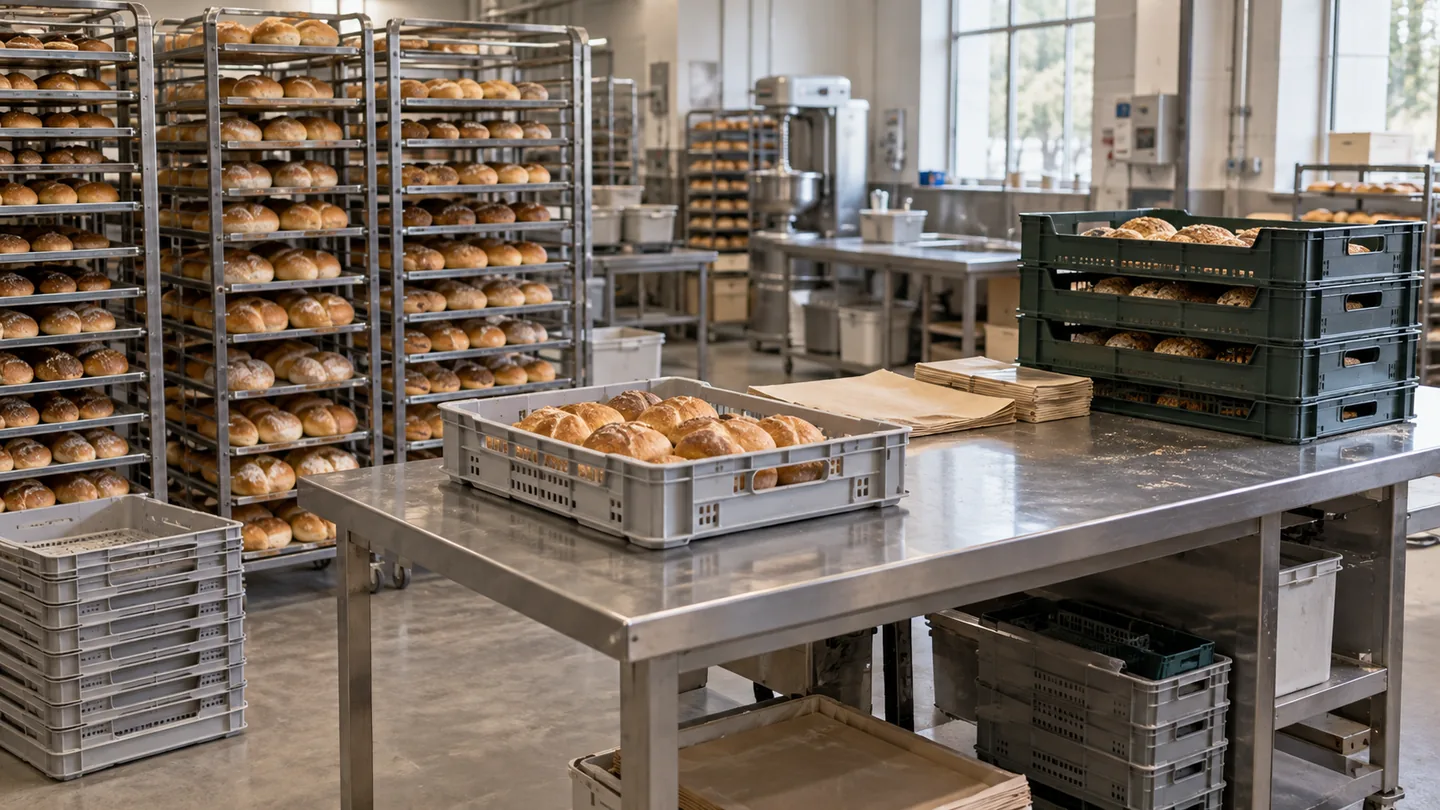
AI-generated illustration created for NextEdge Labs; it does not depict a client facility. Workflow diagram by NextEdge Labs. Icons from Lucide (ISC licence).