Bakery inventory software has to account for what comes back
One shop runs out of buns before lunch while another sends trays back at closing time. Making more tomorrow might solve the first problem and worsen the second. Before changing production quantities, the bakery needs to know what each outlet received, sold, retained and returned. That is a useful starting brief for bakery inventory management software.
Record sales, returns and closing stock against the same dispatch. Otherwise, a replenishment plan can mistake an accounting gap for customer demand.
- 01Plan the bakeOutlet demand, stock and capacity
- 02Produce and dispatchActual output and trays sent
- 03Count at the outletSales, returns, waste and closing stockDoes the stock account balance?YesUse it for planningNoInvestigate the missing movement or count error; reconcile before changing replenishment.
- 04Adjust the next planUse the explained account
Quantities in the worked example below are illustrative, not measured client results. Diagram: NextEdge Labs.
A daily stock account that someone can explain
Consider this illustrative outlet account. The numbers are deliberately simple; they are not results from a client project. Assume every movement belongs to the same trading day and product.
| Movement | Pieces |
|---|---|
| Opening stock | 20 |
| Received from production | +180 |
| Sold | −155 |
| Returned to production location | −25 |
| Recorded waste | −5 |
| Expected closing stock | 15 |
The five missing pieces need a reason
If the physical count in that example is ten, there are five unexplained pieces. They might be an unrecorded transfer, a late sale or a counting error. Automatically classifying them as waste would make the account balance while hiding the problem.
A return also needs two sides. The outlet records what it sent; the receiving location confirms what arrived and its status. Returned food should not become unrestricted stock merely because the transfer completed. The business’s approved handling process determines what happens next.
Keep operational records connected to the responsible person and event. FSSAI’s catering guide includes bakeries in its scope and discusses traceable record changes in section 7.2. That is useful context for record design; the 2017 guide is not a substitute for checking current requirements.
Source: Food Safety and Standards Authority of India (FSSAI) · Scope, printed page 4; section 7.2, printed page 40. Reference details
Recipes need versions; purchases need units
Flour bought in sacks may be issued in kilograms and sold as hundreds of individual products. Store the conversion explicitly. A filling prepared in the morning and used across several recipes needs its own production and consumption record, otherwise its cost and remaining quantity disappear between stages.
For each batch, retain the recipe version used and the actual material issued, returned and lost. A revised recipe should affect future planning without rewriting yesterday’s batch. During evaluation, ask the supplier to change a recipe and then reopen an earlier production record.
Packaging deserves the same attention as ingredients. Enough dough does not mean an order is ready if its boxes or trays are unavailable. Include these requirements in the production plan and distinguish reusable transport trays from packaging consumed by a sale.
Replenishment is a timing decision
Daily totals conceal when products sell out. An outlet that sells everything by 11 a.m. has a different problem from one that sells the same quantity steadily until closing. Capture stockout timing where practical, along with promotions, closures and unusual orders.
Then compare possible responses. A larger first dispatch consumes capacity and increases the stock held at the shop. A second delivery adds transport work but may give the planner better information. Software should make those tradeoffs visible rather than produce an unexplained purchase or production suggestion.
Forecasting can be evaluated after the basic account reconciles. Compare it with recent comparable trading days and look at availability and returns together. A model that reduces returns by leaving shelves empty has not solved the bakery’s commercial problem.
What to ask for in a bakery software demonstration
Bring a real recipe, an outlet dispatch and a return record. Ask the vendor to carry them through the proposed configuration, including a correction. These requests reveal whether the product fits the bakery’s daily work:
- Show a filling shared by two products without counting its ingredients twice.
- Change a recipe while keeping earlier batch quantities and costs intact.
- Receive fewer trays than the production location dispatched and assign the discrepancy for review.
- Separate unsold returns, damage and count corrections in the outlet report.
- Show who can approve a replenishment change after the production cutoff.
Sources and further reading
Sources checked 15 October 2026. The worked examples and software evaluation suggestions are NextEdge Labs’ editorial analysis.
- Food Industry Guide: CateringFood Safety and Standards Authority of India (FSSAI) · First edition, October 2017
Dated operational guidance, not a statement of current legal requirements. The document itself says that applicable regulations take precedence.
Visual credits
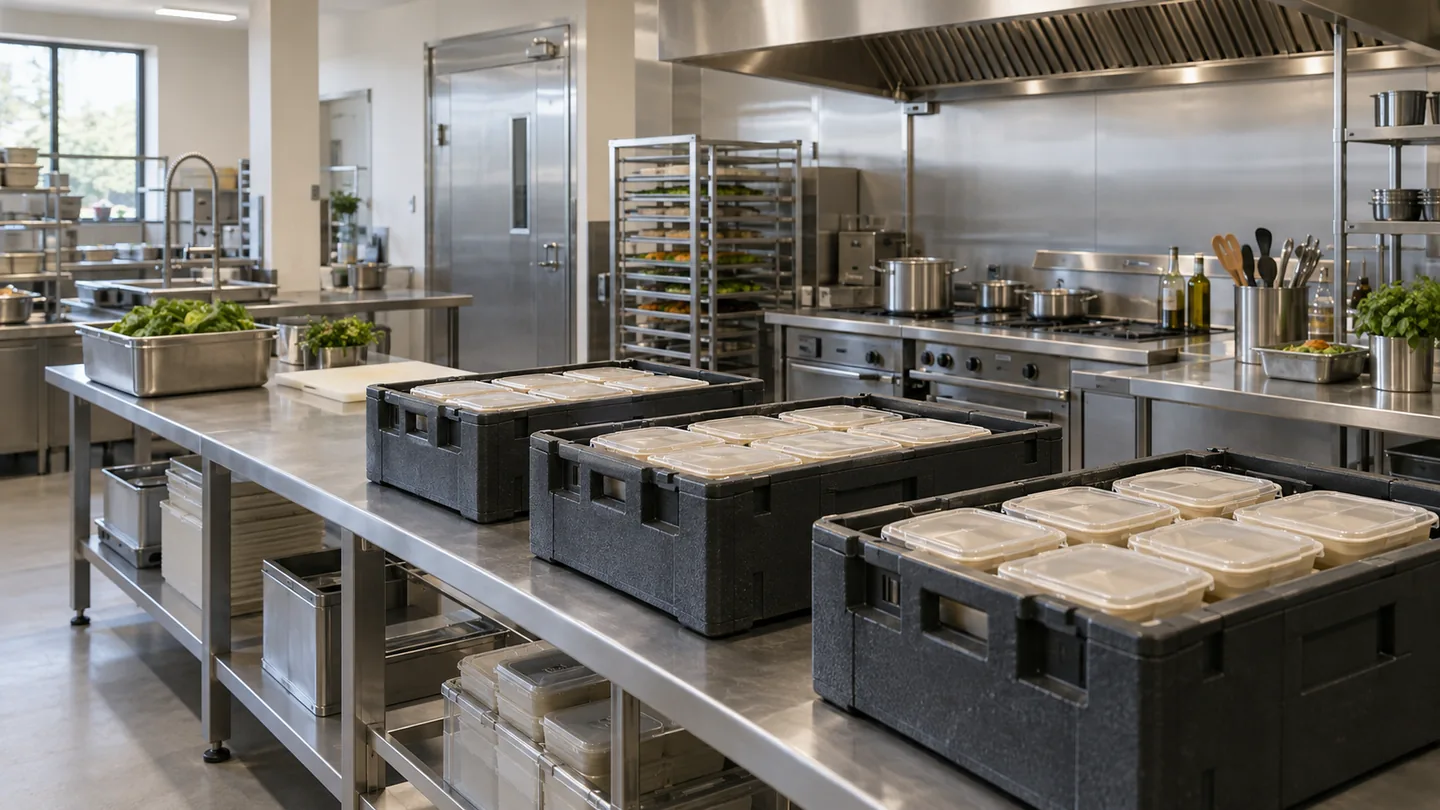
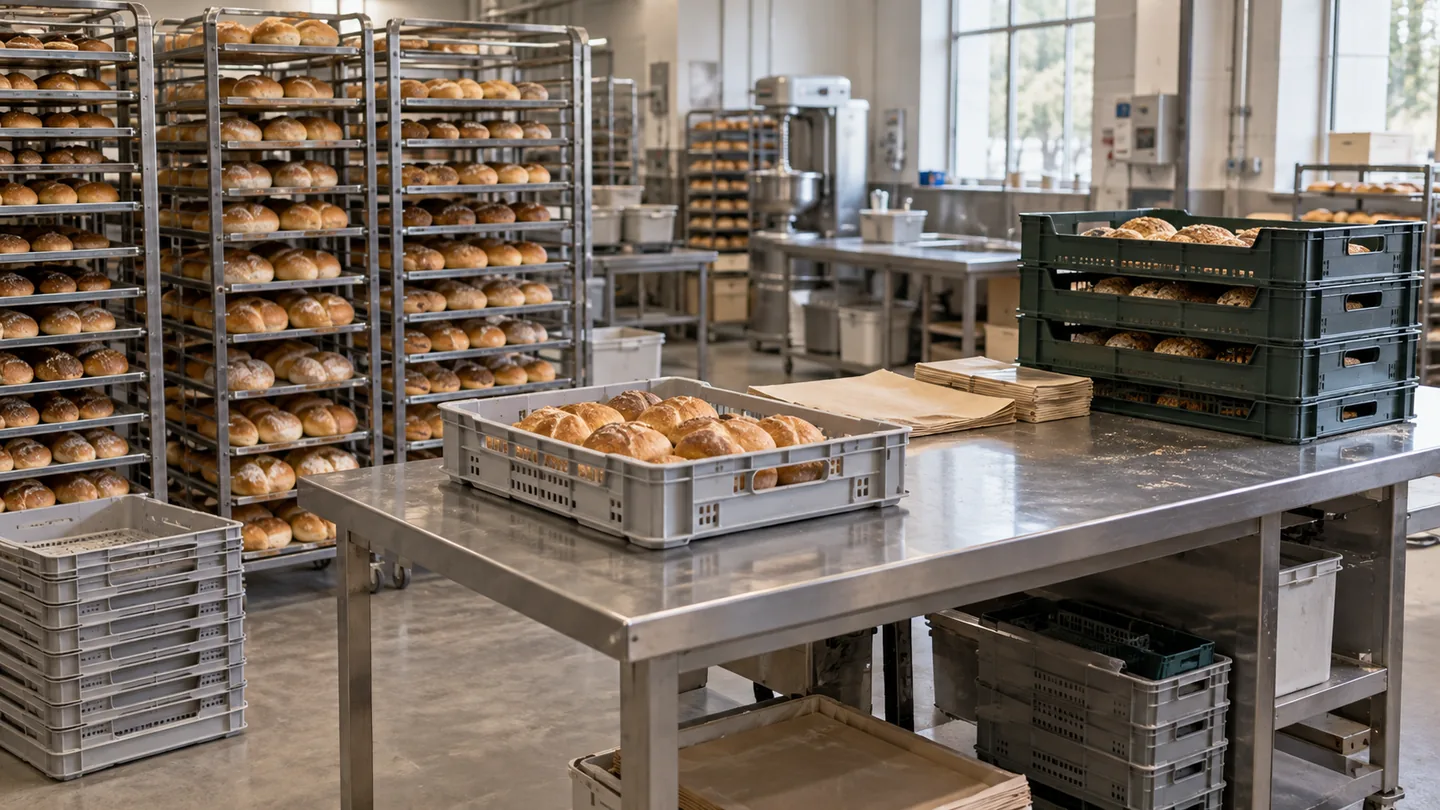
AI-generated illustration created for NextEdge Labs; it does not depict a client facility. Workflow diagram by NextEdge Labs. Icons from Lucide (ISC licence).