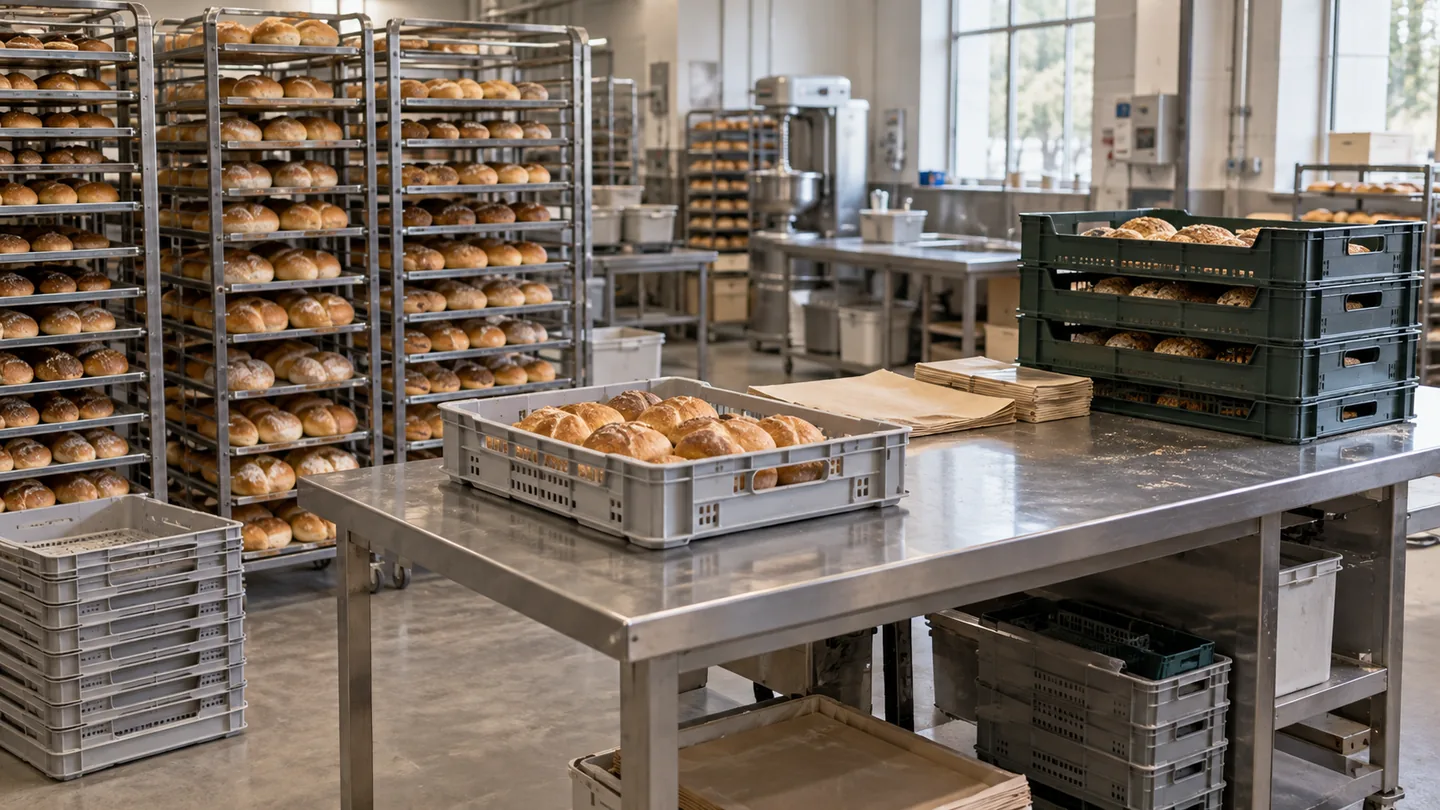
The beverage order is ready. The bottles are not.

A beverage order can look ready in the sales system while production waits for caps or labels. Bringing the run forward may then delay another pack format on the same line. Beverage manufacturing software needs to connect those constraints before a planner commits the schedule. This guide concerns non-alcoholic beverage operations.
A feasible beverage schedule needs the right liquid, packaging and line time. Ingredient availability alone is an incomplete promise.
- 01Capture the orderProduct, pack and due date
- 02Check the constraintsFormula, packaging, line and setup timeAre the required resources ready?YesApprove the sequenceNoResolve the shortage or revise the schedule; get approval before committing the run.
- 03Approve the sequenceMake displaced commitments visible
- 04Close the runActual output, rejects and returns
A planning workflow; operations and quality define the applicable production controls. Diagram: NextEdge Labs.
One formulation can create several planning problems
A base drink sold in two bottle sizes shares a formulation but uses different packaging and may run at different speeds. Keep the approved formula separate from each pack’s bill of materials. Connect both to the finished product and preserve the versions used by an actual run.
In an illustrative planning exercise, an order needs 5,000 bottles but only 4,200 matching caps are available. The planner needs a visible shortage and the expected replenishment date. Quietly reducing the order or borrowing a superficially similar cap moves an unresolved decision out of view.
Ask who approves a component substitution and what open orders it affects. The purchasing team can identify an alternative; the relevant product and quality owners decide whether it is acceptable. The application should record that decision and its scope.
Put changeovers on the schedule
A schedule that assigns every minute to production has left no room for the work between runs. Document the line’s capabilities, operating calendar and changeovers with the people who run it. Include the time and resources needed for the plant’s approved cleaning and setup process, rather than borrowing assumptions from a software demonstration.
The planner should be able to move an urgent order and see which commitments shift. Preserve the earlier schedule for comparison. If every revision overwrites the previous plan, a report can show excellent adherence simply because it is measuring against the latest version.
An existing ERP may already own production orders and material records. A separate planning tool can be useful when sequencing is the gap, but agree how an approved schedule returns to the ERP and how later changes are acknowledged. Two editable schedules create extra work at precisely the point where a single decision is needed.
Close the run in units that production and finance both recognise
Record material issued, actual liquid output, filled units, packaging rejects and material returned. Compare planned with actual quantities without forcing every difference into one process-loss field. A broken bottle, an incorrect opening count and a late posting require different follow-up.
When one run fills several pack sizes, retain the connection from its inputs to each output. GS1’s traceability standard provides a reference for those transformation relationships. The inventory transaction and the lot history should describe the same physical event.
A reversal is worth demonstrating. If someone corrects the packed quantity, the stock balance, production record and downstream allocation should all agree afterwards. A tidy original transaction is the easy part of the evaluation.
Source: GS1 · Section 5: data recording requirements, R24. Reference details
A forecast is useful only before the commitment is locked
Packaging orders, production runs and distributor replenishment operate on different horizons. Decide which decision a forecast is supposed to inform. A prediction made after packaging is committed cannot improve that purchase, however accurate it looks afterwards.
Keep distributor orders, consumer sales where available, promotions and stock-building events distinct. Compare any forecast with a simple recent-history or seasonal baseline at the horizon the team can act on. Record overrides so the team can distinguish a model error from a deliberate commercial decision.
A useful first demonstration takes an order through a shortage
Choose a product family with two pack formats. Delay one packaging receipt, revise the sequence, record a partial run and correct an output quantity. Then show what sales, purchasing and dispatch see. This exposes more of the implementation than an ideal run with every component available.
Before expanding the scope, check whether planners spend less time reconstructing the schedule and whether the reasons for missed runs are recorded consistently. Those observations will help decide whether the next investment belongs in better master data, a planning application or more advanced optimisation.
Sources and further reading
Sources checked 15 October 2026. The worked examples and software evaluation suggestions are NextEdge Labs’ editorial analysis.
- GS1 Global Traceability StandardGS1 · Release 2.0, August 2017
Reference framework for identification and traceability data. Citing it does not imply that a proposed system is GS1 certified.
Visual credits
AI-generated illustration created for NextEdge Labs; it does not depict a client facility. Workflow diagram by NextEdge Labs. Icons from Lucide (ISC licence).