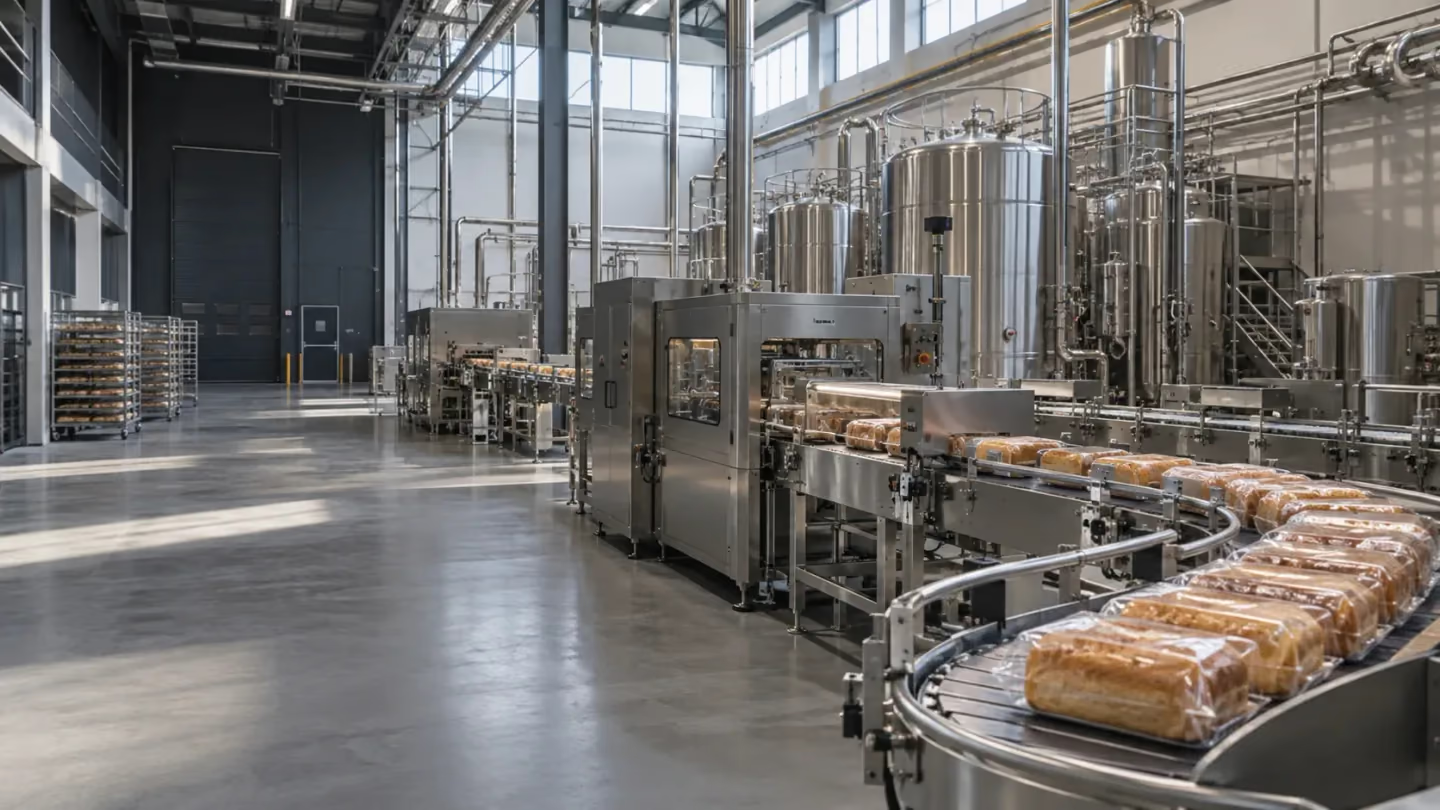
Spice and Botanical Raw Material Pesticide Residue and Aflatoxin Pre-Shipment COA Gating
For Procurement heads, buyers and materials planners · Plan implementation
TL;DR — what you’ll learn
- Bind spice pesticide residue aflatoxin coa gating directly to lot-level ERP and MES stage gates so non-conforming batches cannot move to packing or dispatch.
- Eliminate end-of-shift paper log transcription that masks yield loss, thermal or chemical excursions, and FEFO violations.
- Enforce FSSAI Schedule IV and GFSI (BRCGS / FSSC 22000) verification checkpoints with timestamped operator and QA sign-offs.
- Review shift-level variance, rework cost, and first-pass release rates in the daily plant operations meeting.
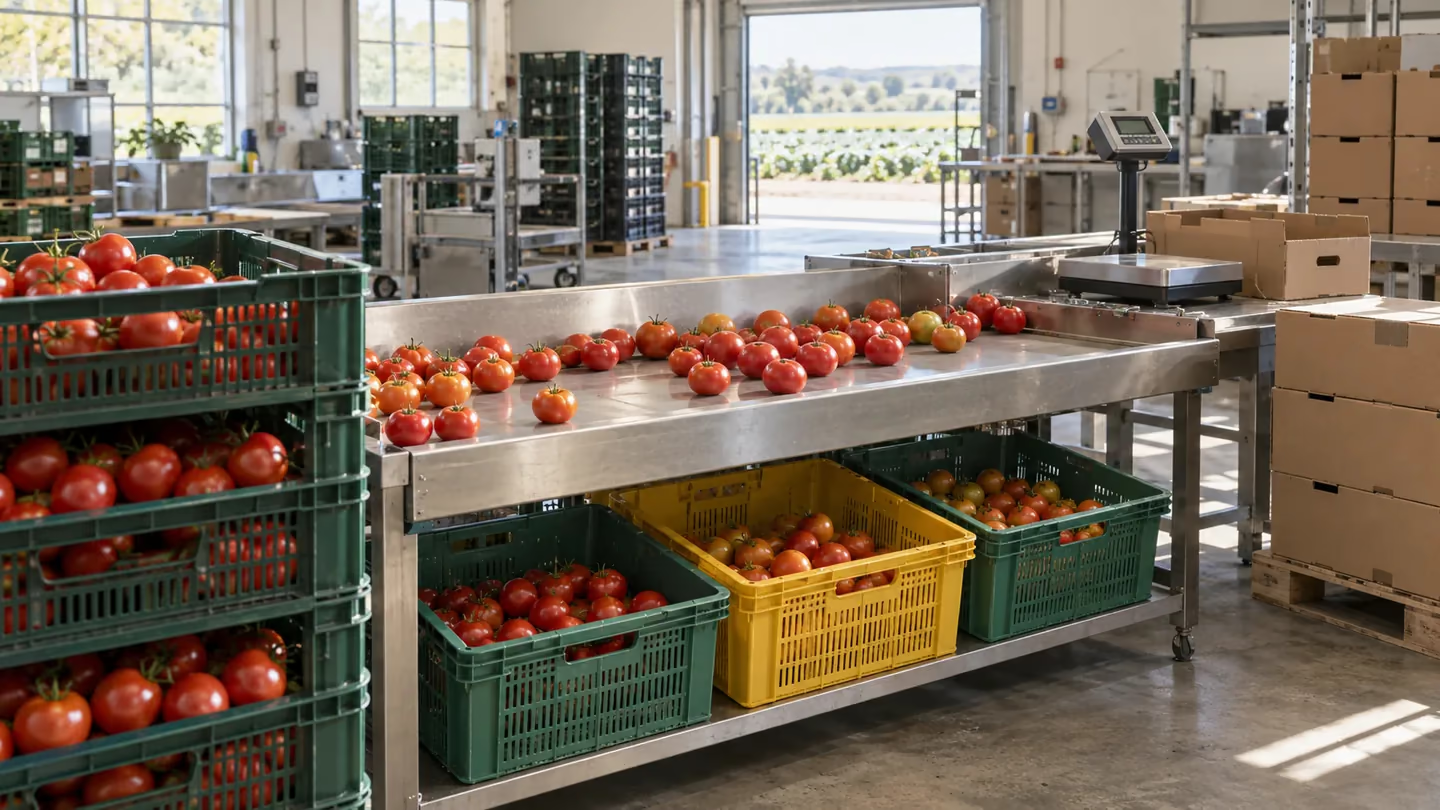
Indian food and beverage processors operate under tight margin thresholds, seasonal raw-material variability, and strict shelf-life clocks. When spice pesticide residue aflatoxin coa gating is tracked on shift clipboards and keyed into ERP hours after palletization, both food-safety traceability and batch margin control break down.
How should Indian food and beverage plants architect spice pesticide residue aflatoxin coa gating across ERP, MES, and QA workflows so shift-level variances and food-safety holds are enforced before dispatch?
Bind spice pesticide residue aflatoxin coa gating directly to lot-level ERP and MES stage gates so non-conforming batches cannot move to packing or dispatch, eliminating end-of-shift paper log transcription.
- 01Lock master specVerify approved recipe, COA and sensor calibration
- 02Capture live runRecord process readings, weights and lot codes
- 03Audit tolerancesCheck critical limits and mass-balance varianceDo all stage-gate parameters and mass balances pass?YesRelease genealogyNoQuarantine the affected lot in ERP and route an exception to QA before packing or dispatch.
- 04Release genealogyVerify bidirectional lot trail before FEFO dispatch
Illustrative information flow. The article explains the evidence, exceptions and responsible decisions. Diagram: NextEdge Labs.
Why Spice and Botanical Raw Material Pesticide Residue and Aflatoxin Pre-Shipment COA Gating Breaks Down in High-Throughput Food Plants
Across multi-line dairy, beverage, snack, and culinary plants, spice pesticide residue aflatoxin coa gating fails when physical line events are decoupled from system stock states. Operators under throughput pressure record target numbers on paper logs while actual mass balances, chemical titrations, or thermal holds drift silently.
During FSSAI Schedule IV inspections and modern-trade customer audits, gaps in spice pesticide residue aflatoxin coa gating surface as unreconciled input-output balances, missing prerequisite verification timestamps, and slow mock-recall retrieval across raw, WIP, and finished-goods lots.
Scroll horizontally to see all columns.
| Control Point | Legacy Clipboard / Delayed ERP Pattern | Execution-First Stage-Gate Control | Regulatory / Audit Anchor |
|---|---|---|---|
| Parameter & lot capture | Written on shift sheets and keyed next morning | Captured live via PLC/scale integration or line-side scanner | FSSAI Schedule IV GMP |
| Excursion containment | Verbal supervisor override during peak run | Automatic system hold on affected batch and pallet IDs | FSSC 22000 / BRCGS Issue 9 |
| Mass-balance reconciliation | Monthly finance stocktake adjustment | Shift-wise theoretical vs actual consumption variance gate | Internal Cost & Yield Governance |
Source: GS1 · Lot identification and movement event records. Reference details
Four-Stage Execution Workflow for Spice and Botanical Raw Material Pesticide Residue and Aflatoxin Pre-Shipment COA Gating
Moving spice pesticide residue aflatoxin coa gating from a passive QA record to an active plant control requires four sequential system gates across procurement, production, quality, and warehousing. Each gate validates master-data tolerances before permitting the lot to consume downstream capacity or packaging materials.
Gate 1 locks the pre-run master specification, calibrated sensor status, and valid COA. Gate 2 captures in-line parameters and mass-balance weights continuously. Gate 3 quarantines any lot breaching thermal, chemical, yield, or shelf-life limits, and Gate 4 verifies complete forward/backward lot genealogy before FEFO dispatch.
Source: Frappe / ERPNext · Material movement and reconciliation controls. Reference details
Competitor Architecture and Enterprise Operational Benchmark
Plant heads and supply-chain directors evaluating spice pesticide residue aflatoxin coa gating typically compare custom ERP reports against standalone QA checklists. Neither approach prevents line-side execution errors at the moment they occur.
Our Enterprise Operational operational benchmark compares those legacy options against a closed-loop F&B stage-gate architecture.
Scroll horizontally to see all columns.
| Benchmark Dimension | Delayed ERP Backflushing | Standalone Paper / Excel Checklists | NextEdge Closed-Loop F&B Architecture |
|---|---|---|---|
| Time to detect variance | 24-72 hours after shift closure | During weekly or pre-audit file review | Real-time alert during batch execution |
| Mock recall readiness | 3-6 hours across siloed spreadsheets | Incomplete linkage between RM, WIP, and FG | Under 10 minutes full forward/backward genealogy |
| Impact on giveaway & rework | Hidden inside broad monthly scrap write-offs | No financial linkage to batch costing | Direct reduction in batch variance and rework cost |
ERP-MES-LIMS Data-Payload Contract and Lot Genealogy Schema for F139
To eliminate silent yield drift, thermal or chemical process deviations, and broken forward/backward traceability in spice pesticide residue aflatoxin coa gating (F139), Indian food and beverage plants must enforce a deterministic electronic payload contract between shop-floor PLCs, weighbridges, laboratory LIMS terminals, and the core ERP stock ledger. Whenever a line operator, quality chemist, or cold-store supervisor records a batch event, the middleware verifies five mandatory lot-genealogy attributes before committing the inventory transaction.
Across high-speed dairy processing, edible oil refining, retort sterilization, spice extraction, and modern-trade beverage bottling, FSSAI Schedule IV observations and customer fill-rate penalties frequently trace back to unverified shift spreadsheets or end-of-day backflushing. Binding spice pesticide residue aflatoxin coa gating to cryptographic parent-child lot IDs ensures that no raw material, intermediate WIP tank, or finished pallet can bypass mandatory quality and mass-balance interlocks.
Every automated scale reading, inline refractometer/conductivity pulse, or barcode scan is written to an append-only audit log with operator authentication, calibrated instrument serial validity, and Indian Rupee (INR) cost-absorption tags under ICAI Ind AS 2.
Scroll horizontally to see all columns.
| System Boundary | Source Platform & Sensor | Mandatory Payload Elements | Deterministic Gate & Tolerance Rule | Quarantine Hold Queue |
|---|---|---|---|---|
| 1. RM & Packaging Gate | Weighbridge, LIMS & Barcode Scanner | Supplier lot ID, NABL lab COA vector, allergen roll barcode hash, fat/SNF or moisture % | Hard block on line issue if COA is pending, adulteration screen fails, or artwork revision mismatches BOM | Procurement & QA Intake Quarantine |
| 2. Process & Lethality Gate | PLC Historian, SCADA & Inline Probes | CIP conductivity/titration, retort F0 curve, Brix/carbonation ratio, fryer TPC %, MAP oxygen % | Freeze filler/packing transfer if thermal lethality, chemical concentration, or headspace O2 breaches critical limit | Production CCP / OPRP Hold Queue |
| 3. Yield & Mass-Balance Gate | MES Batch Engine & Floor Weighscales | Gross input weight, net packed cases, trim/rework weight, bleaching/deodorization or syrup loss % | Suspend work-order completion if unaccounted mass balance drifts beyond +-0.75% of standard norm | Costing & Plant Yield Review Queue |
| 4. Cold-Chain & FEFO Dispatch | WMS, Reefer Telematics & ERP Billing | Pallet SSCC barcode, manufacturing/expiry date, customer min-RSL rule, dock temperature log | Block pick-confirm and GST invoice generation if lot violates FEFO or reefer pulp temp exceeds threshold | Warehouse & Dispatch Exception Queue |
- Raw & Packaging Intake Gate: Validate vendor Certificate of Analysis (COA), pesticide/mycotoxin pre-shipment clearance, milk fat/SNF adulteration screen, or allergen artwork revision hash before generating the Goods Receipt Note (GRN).
- In-Process Thermal, Chemical & Recipe Interlock: Capture live CIP titration/conductivity, retort F0 lethality, fryer FFA/TPC polarity, inline Brix carbonation, or MAP residual headspace oxygen directly from calibrated sensors with automatic lot quarantine on excursion.
- Shift Mass-Balance & Co-Packer Reconciliation: Evaluate closed-loop conservation equations where Input Mass equals Good Output plus Rework/Trimming plus Verified Effluent/Evaporation Loss within engineered tolerances before closing the shift work order.
- FEFO Shelf-Life & Dispatch Allocation Gate: Enforce customer-specific remaining shelf-life (RSL) rules, dock-seal reefer temperature pre-cooling checks, and distributor return grading locks before releasing GST e-Invoices and e-Way Bills.
Source: GS1 · Lot identification and movement event records. Reference details
Worked Indian INR (₹) Plant Mass-Balance and Margin Protection Scenario (F139)
Consider an Indian multi-line food and beverage processing facility in Gujarat, Maharashtra, or Punjab processing 4,200 MT (or 18,50,000 cases) per month with a monthly raw-material, packaging, and conversion baseline of ₹28,50,00,000 governed by spice pesticide residue aflatoxin coa gating (F139).
Under legacy clipboard logging and next-day ERP backflushing, the plant suffered 1.95% unattributed yield and giveaway loss, frequent modern-trade short-shelf-life rejections, and delayed batch hold containment when process parameters drifted mid-shift. Implementing real-time stage-gate interlocks across spice pesticide residue aflatoxin coa gating transformed both physical recovery and financial close speed.
By separating normal engineered evaporation or trimming loss (absorbed into standard product cost under Ind AS 2) from abnormal process excursions or co-packer wastage (charged immediately to variance owners or recovered via vendor/co-packer debit notes), the plant protected ₹46,85,000 per month in net operating margin.
Scroll horizontally to see all columns.
| Operational & Margin Metric | Legacy Shift Clipboards + Delayed ERP | Integrated F139 Closed-Loop Control | Verified Monthly & Annual Impact (INR) |
|---|---|---|---|
| Unrecorded Yield Drift, Overfill & Film Wastage | 1.95% of throughput lost to silent giveaway & scrap (₹55,57,500/month) | Controlled at 0.42% verified process norm (₹11,97,000/month) | +₹43,60,500/month (+₹5,23,26,000/year) margin saved |
| Quality Excursion, Rework & Batch Rejection Cost | 3.1% batches requiring thermal/chemical rework or destruction (₹18,20,000/month) | 0.35% batches held via early inline OOT/CCP containment (₹2,05,000/month) | +₹16,15,000/month direct rework/write-off avoided |
| Modern-Trade & Quick-Commerce RSL Fill-Rate Penalties | 4.8% dispatch lines penalized for short shelf-life or stockout (₹9,40,000/month) | 0.4% penalty rate with hard FEFO and customer RSL allocation locks (₹78,000/month) | +₹8,62,000/month SLA penalty & return reduction |
| Mock-Recall Genealogy & Month-End Costing Close | 5.5 hours recall trace; 7.5 days monthly WIP/co-packer reconciliation | 8 minutes bidirectional lot trace; 1.0 day automated Ind AS 2 close | 100% FSSAI Schedule IV, BRCGS & statutory audit readiness |
Source: Frappe / ERPNext · Material movement and reconciliation controls. Reference details
Multi-Tier Food Safety (CCP/OPRP) & Yield Escalation Matrix and 4-Week Pilot Playbook
When an inline sensor, lab assay, weighscale balance, or warehouse scan in spice pesticide residue aflatoxin coa gating (F139) crosses its tolerance threshold, operators cannot manually overwrite the reading to keep the packing line running. The system routes the exception through a four-tier escalation protocol aligned with FSSC 22000, BRCGS Issue 9, and FSSAI Schedule IV hazard analysis critical control point (HACCP) rules.
To deploy this architecture without disrupting peak seasonal production or daily dispatch commitments, plant operations and IT teams execute a structured 4-week parallel pilot on one flagship processing and packaging line before scaling plant-wide.
Scroll horizontally to see all columns.
| Executive Governance KPI | Baseline Legacy Plant Performance | Target F139 Stage-Gate Standard | Primary Review Owner & Cadence |
|---|---|---|---|
| First-Pass Right-First-Time (RFT) Batch Release | 84% - 89% of batches released without rework or log corrections | >= 98.2% first-pass QA & mass-balance release | Head of Quality & Plant Manager (Daily huddle) |
| Unaccounted Mass-Balance & Giveaway Variance | 1.50% - 2.40% of raw material input value | < 0.45% verified theoretical-to-actual variance | Production Manager & Cost Controller (Shift/Weekly) |
| Bidirectional Mock-Recall Retrieval Time | 3.5 to 6.0 hours across paper & Excel registers | < 10 minutes for 100% RM-to-customer lot balance | Food Safety Team Leader (Monthly drill) |
| Customer Fill-Rate & Remaining Shelf-Life (RSL) Compliance | 91.5% OTIF with frequent modern-trade expiry returns | >= 99.1% FEFO/RSL compliant dispatch | Supply Chain & Distribution Head (Weekly review) |
- Tier 1 Operational Warning (0 to 15 Minutes): Minor yield drift (0.50% to 0.75%) or utility parameter approaching alert limit triggers an amber HMI alert; shift supervisor logs root-cause adjustment before the next hourly check.
- Tier 2 OPRP / Quality Hold (15 Minutes to 2 Hours): Out-of-specification titration, Brix, moisture, FFA/TPC, or barcode revision mismatch automatically locks affected pallet SSCCs in ERP Quarantine and notifies the QA Manager and Production Head.
- Tier 3 Critical Control Point (CCP) Breach (Immediate Line Interlock & 8-Hour CFT Review): Retort F0 drop, pasteurizer diversion, allergen changeover failure, or mycotoxin/pesticide breach halts downstream packing release, isolates all sibling lots back to the last verified clean check, and mandates formal Food Safety Team disposition.
- Tier 4 Commercial, Co-Packer & Statutory Settlement Lock (Within 24 to 48 Hours): Unreconciled toll-conversion wastage, farmer/vendor payout variance, or expired distributor return destruction requires joint Finance Controller and Quality Head digital sign-off before credit/debit note or GL posting.
- Week 1 Pilot — Master Recipe, COA & Sensor Calibration Baseline: Audit 60 days of shift logs, theoretical BOM loss factors, customer RSL matrices, and PLC/scale tags for one bottleneck line.
- Week 2 Pilot — Shadow Telemetry & Barcode Lot Capture: Stream live batch weights, lab COAs, and packaging scans into staging ERP/MES in shadow mode to eliminate false-positive holds.
- Week 3 Pilot — Active Quarantine Interlocks & Mock-Recall Drills: Enable hard stage-gate holds across all three shifts and run an unannounced 10-minute forward/backward mock-recall exercise.
- Week 4 Pilot — Ind AS 2 Costing Reconciliation & Plant Cutover: Reconcile physical tank/silo dips, packed cases, and scrap weighments against the General Ledger, then retire manual shift clipboards.
Source: GS1 · Lot identification and movement event records. Reference details
Summary
Standardizing spice pesticide residue aflatoxin coa gating with real-time stage-gate interlocks protects both food safety compliance and plant gross margin across Indian food and beverage operations.
What to do next
- Map all current paper logs and delayed ERP entries used to manage spice pesticide residue aflatoxin coa gating across two representative shifts.
- Configure hard hold-and-release tolerances in ERP/MES so lots failing spice pesticide residue aflatoxin coa gating checks cannot be packed or invoiced.
- Track shift-level yield variance, first-pass QA release rate, and mock-recall retrieval time for 30 consecutive days.
Operational FAQs — People also ask
Concise answers to common evaluation and implementation questions on spice pesticide residue aflatoxin coa gating in food & beverage operations.
What is the primary operational control rule for spice pesticide residue aflatoxin coa gating?
How should procurement teams handle exceptions and approval boundaries?
When should teams use deterministic ERP workflow rules versus AI agents for spice pesticide residue aflatoxin coa gating?
What is the safest way to evaluate or pilot changes for "Spice and Botanical Raw Material Pesticide Residue and Aflatoxin Pre-Shipment COA Gating"?
Scope this automation around your operation
Tell us your current systems, transaction volume and the exception you need to resolve. We can discuss a focused first release, its review controls and how to measure the result.
Sources and further reading
Sources checked 15 October 2026. The worked examples and software evaluation suggestions are NextEdge Labs’ editorial analysis.
- GS1 Global Traceability StandardGS1 · Release 2.0, August 2017
Reference framework for identification and traceability data. Citing it does not imply that a proposed system is GS1 certified.
- Stock EntryFrappe / ERPNext · Online product documentation, accessed October 2026
Examples of distinct material receipt, issue, transfer and manufacturing transactions, including transit handling.
Visual credits
AI-generated illustration created for NextEdge Labs; it does not depict a client facility. Workflow diagram by NextEdge Labs. Icons from Lucide (ISC licence).