Poultry processing records: separate marinade pickup, cook loss and glaze weight
For IT heads, operations directors and digital project owners · Compare approaches
TL;DR — what you’ll learn
- Name the before/after weight population and denominator for every pickup or loss percentage.
- Separate intentionally added solution, coating, cooking-stage change and glaze from the starting poultry mass.
- A gross glazed weight is different from the product's declared net-weight basis. Qualified quality/labelling owners determine applicable methods and claims.
- Link each weight to the approved process/specification and disposition evidence. Balanced arithmetic cannot validate cooking safety or product release.
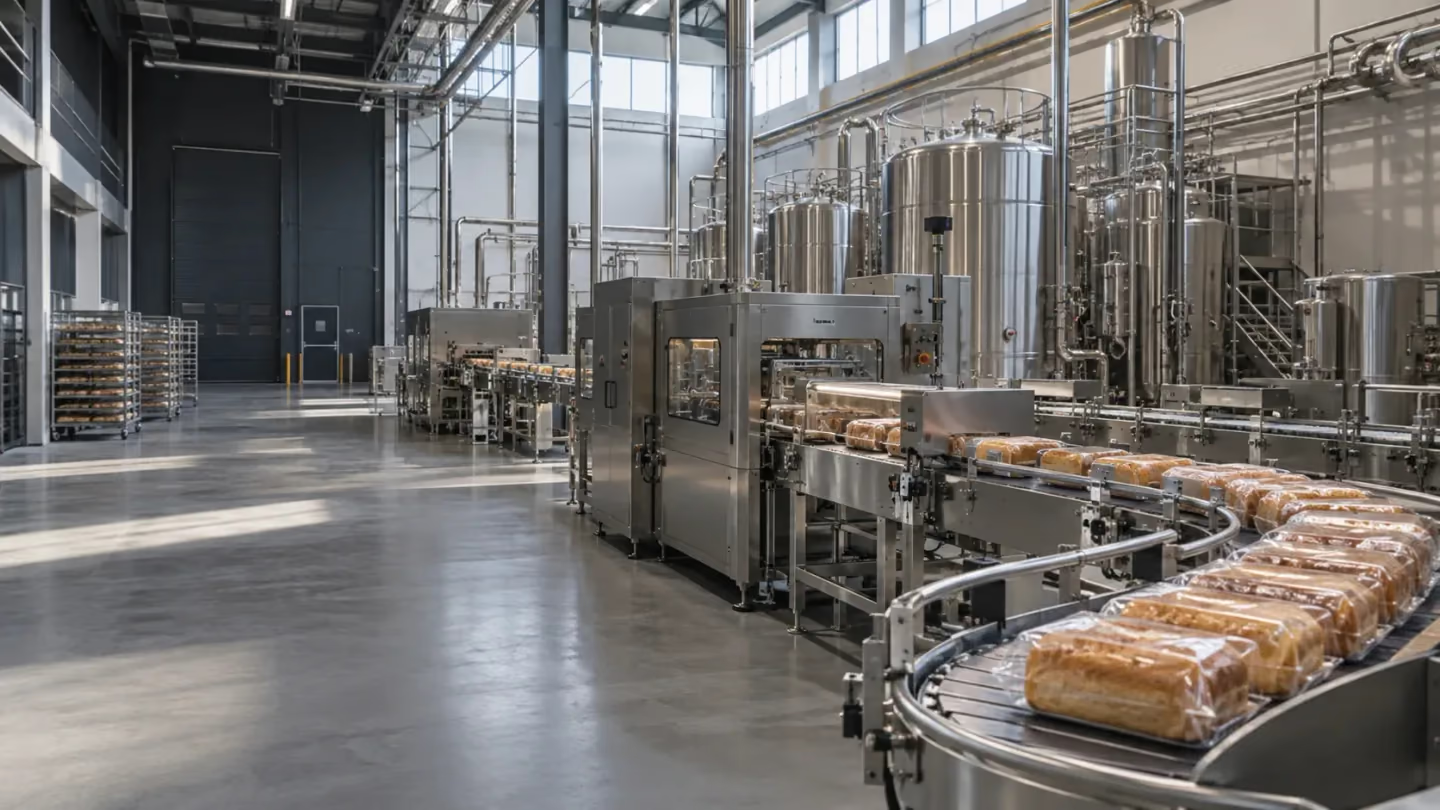
A further-processing report compares incoming poultry weight with glazed pack weight and calls the difference “yield”. One run includes coating and glaze; another does not. The report makes the heavier final population look better while concealing which additions, removals and measurement bases caused the difference.
How do poultry further-processing plants control vacuum-tumbler brine pickup percentages, IQF glaze weight tolerances, and cook-loss yield reconciliation?
Name the before/after weight population and denominator for every pickup or loss percentage. Separate intentionally added solution, coating, cooking-stage change and glaze from the starting poultry mass.
- 01Capture batch contextLot, unit, timestamp and source reference
- 02Verify against rulesActive specification, tolerance and cut-off
- 03Reconcile variancesSeparate physical events from timing gapsDo the batch records and tolerances agree?YesApprove ledger postingNoKeep the disputed quantity in a visible hold status and route to the designated owner.
- 04Approve ledger postingRetain signed-off evidence and history
Illustrative information flow. The article explains the evidence, exceptions and responsible decisions. Diagram: NextEdge Labs.
Avoid a single field called added water
Intentionally added solution, incidental retained processing water and externally applied glaze have different record meanings. Their applicable measurement and label treatment require qualified review for the actual product and market. USDA FSIS's public material distinguishes retained-water guidance from added-solution regulation; that US context illustrates why a generic field is insufficient, not a rule automatically applicable to every poultry plant. FSIS revised retained-water guideline notice, Water in meat and poultry.
Record source lot, product state, weigh-event ID, net material mass excluding packaging, unit, scale/reference and validity, time, stage and included additions. A comparison must refer to corresponding material. Comparing a whole incoming lot with only part of its output can create a false loss or gain.
The quality/process owner defines the actual stage boundaries and approved measurement basis. The label/regulatory owner determines permissible declarations and net-content treatment. The integration must not use a calculated percentage as proof that a permitted limit or safety requirement was met.
Scroll horizontally to see all columns.
| Checkpoint | Primary record | Exception action |
|---|---|---|
| Batch & lot capture | Receipt / production log | Hold lot until identity and unit match |
| Tolerance verification | Quality & weight register | Route variance to named supervisor |
| Cut-off reconciliation | ERP stock & finance ledger | Separate unresolved balance before close |
Source: GS1 · Lot identification and movement event records. Reference details
Worked example: three percentages with three denominators
All values are illustrative administrative measurements. Assume one synthetic population is followed consistently, with packaging excluded and no unrecorded movement. The stages are teaching labels, not an approved processing sequence or recipe.
Incoming poultry is 1,000 kg. Measured material after the fixture's marination stage is 1,060 kg. The net mass increase is 60 kg.
Pickup on the declared incoming-poultry basis is 60 ÷ 1,000 × 100 = 6%. The added-mass share of the post-stage population would instead be 60 ÷ 1,060 × 100 ≈ 5.66%. Those figures are not interchangeable, and neither is a label claim approved here.
Source: Frappe / ERPNext · Material movement and reconciliation controls. Reference details
Join weights to the decisions behind them
Production owns actual additions, corresponding stage quantities and lot genealogy. Quality validates sampling/measurement applicability, approved specification and product disposition. The process authority owns the validated processing requirements.
Warehouse owns acknowledged pack/pallet movements. Finance approves yield/cost classification, including recorded removals and ingredient consumption. System owners maintain mappings and permissions.
Retain planned targets and observed weights as different values. Link the approved recipe/process version, actual evidence, deviations and authorised result. A scale event, completed cycle or matched total cannot automatically clear a food-quality hold. A future AI summary may locate evidence for review; it must not infer lethality, safe reuse or acceptable added-solution content.
Exceptions that prevent a trustworthy comparison
A weight includes packaging tare. Keep the gross/tare/net evidence and route missing basis for review. Do not compare it with packaging-excluded material weight.
Only part of a lot passes a stage. Split the population and preserve quantities/identities. The original full-lot denominator cannot be reused without adjustment.
An assay or specification is rejected or revised. Keep the old decision and flag affected reports. Do not relabel an earlier measured result as if it used the new method.
Evaluate one product's record flow before automating targets
A controlled stage-weight sheet may resolve unclear denominators. Configure existing MES/ERP catch-weight fields before adding an application. Integrate scale and approved specification references when transcription is the demonstrated gap. A bounded reconciliation view is justified only if existing tools cannot keep corresponding populations and approvals visible.
Assess one product/line in shadow mode using synthetic or authorised minimised data. Baseline unmatched stage weights, missing tare/basis references and unacknowledged pack movements. Proposed acceptance includes reproducing 6%, 5.66%, 81.82%, 18.18%, 6.25%, 6.67% and the 960 kg bridge with the correct labels.
Test partial lots, missing net-weight evidence, rejected specifications and outage replay. Qualified food-quality, process and labelling owners must validate the actual methods and requirements before reliance. No limits or passed implementation results are claimed here.
Let the denominator explain the result
Poultry yield reporting is useful when it explains which material was measured and which additions or removals changed it. Keeping stage arithmetic separate from safety and labelling authority lets a reviewer investigate the record without mistaking a favourable percentage for approved product.
Map one product's stage populations, additions and measurement bases with qualified owners. Name each pickup, loss and glaze denominator explicitly in the report. Reconcile ingredient issue, net pickup and pack movement as separate evidence chains. Rehearse partial lots, missing net-weight evidence and recovery before enabling inventory proposals.
Summary
Reliable poultry further processing marination tumbler pickup yield depends on consistent lot identity, shared cut-off times, and explicit exception ownership across production, quality, and finance. When teams verify physical evidence before posting adjustments, both traceability and margin reporting remain defensible.
What to do next
- Audit one recent week of poultry further processing marination tumbler pickup yield transactions to identify unrecorded movements, unit mismatches, or late entries.
- Define the mandatory lot, unit, and approval fields required before an operator or integration can post a status change.
- Pilot the exception queue on one product line and review unresolved variances at a fixed daily cut-off.
Compare this workflow with your current setup
Share the step that takes the most manual work, the systems involved and the exceptions your team handles. That gives us a concrete starting point for comparing approaches.
Sources and further reading
Sources checked 15 October 2026. The worked examples and software evaluation suggestions are NextEdge Labs’ editorial analysis.
- GS1 Global Traceability StandardGS1 · Release 2.0, August 2017
Reference framework for identification and traceability data. Citing it does not imply that a proposed system is GS1 certified.
- Stock EntryFrappe / ERPNext · Online product documentation, accessed October 2026
Examples of distinct material receipt, issue, transfer and manufacturing transactions, including transit handling.
Visual credits
AI-generated illustration created for NextEdge Labs; it does not depict a client facility. Workflow diagram by NextEdge Labs. Icons from Lucide (ISC licence).