Edible-oil yield accounting: reconcile side streams and tank movements before declaring oil loss
For Logistics heads, warehouse leads and distribution managers · Compare approaches
TL;DR — what you’ll learn
- Define the process and period boundary before comparing crude-oil input with refined output. Opening/closing material and added inputs belong in the reconciliation.
- Soapstock, spent bleaching earth and distillate are different streams. Their gross weights cannot all be treated as kilograms of lost neutral oil.
- Keep whole-mass balance, oil-component recovery and financial by-product credit as separate calculations with approved measurement bases.
- Use the software to expose missing movements and evidence. Qualified process, quality and finance owners determine interpretation and disposition.

A refinery reports a six-percent difference between crude input and refined output as “oil loss”. The report excludes opening tank contents, added process materials and closing work in progress, then subtracts all soapstock and spent-earth weight as if each stream were pure oil. The resulting number cannot distinguish a measurement gap from an actual oil-component loss.
How should edible oil refineries reconcile crude oil FFA neutralization soapstock, bleaching-earth oil retention, and deodorizer distillate losses against refined-oil tank yields?
Define the process and period boundary before comparing crude-oil input with refined output. Opening/closing material and added inputs belong in the reconciliation. Soapstock, spent bleaching earth and distillate are different streams. Their gross weights cannot all be treated as kilograms of lost neutral oil.
- 01Capture batch contextLot, unit, timestamp and source reference
- 02Verify against rulesActive specification, tolerance and cut-off
- 03Reconcile variancesSeparate physical events from timing gapsDo the batch records and tolerances agree?YesApprove ledger postingNoKeep the disputed quantity in a visible hold status and route to the designated owner.
- 04Approve ledger postingRetain signed-off evidence and history
Illustrative information flow. The article explains the evidence, exceptions and responsible decisions. Diagram: NextEdge Labs.
Start with the refinery configuration actually in use
Alfa Laval's public process overview distinguishes chemical and physical refining routes and describes different side streams, including soap-related and distillate streams. That establishes why one universal flow diagram is unsuitable. It does not supply the actual plant's configuration, loss factors or achievable yield. Alfa Laval edible-oil refining overview.
Map the actual units and transfers with the qualified process owner. Record where material enters and leaves the accounting boundary, which internal transfers cancel within it, and which tanks contain opening/closing stock. An internal recirculation should not become a second external input. A stream absent from the plant's route should not receive an invented quantity simply because the template includes it.
Each movement needs source/destination, material/lot, quantity and unit, time/cutoff, measurement reference and validity status. Record mass directly where available. If tank volume is converted to mass, retain the applicable density and measurement-basis evidence approved by the owner; do not apply one fixed conversion to unlike oils or side streams.
Scroll horizontally to see all columns.
| Boundary input or opening material | Mass |
|---|---|
| Crude oil received into the boundary | 100,000 kg |
| Other documented material inputs | 2,000 kg |
| Opening work in progress within the boundary | 5,000 kg |
| Total to account for | **107,000 kg** |
Source: GS1 · Lot identification and movement event records. Reference details
Worked example: gross refined output is 94%, while the whole-mass gap is 500 kg
All quantities are illustrative. Assume one declared boundary and period with compatible kg measurements. The fixture includes all material additions and outputs for that boundary; the categories are mutually exclusive. It does not prescribe a real refining route or claim that all the named side streams occur in every plant.
The whole-mass difference is 107,000 − 106,500 = 500 kg. It is an unexplained balance difference for review, not automatically oil loss. A missing condensate, other omitted stream, measurement uncertainty or cutoff issue would require evidence; none is invented to force balance.
Gross refined output divided by current-period crude input is 94,000 ÷ 100,000 × 100 = 94%. That simple ratio does not establish that 6,000 kg of oil was destroyed or irrecoverably lost. The boundary also includes other inputs and an increase of 500 kg in work in progress. The side streams total 7,000 kg, but their combined gross mass is not their oil content.
Source: Frappe / ERPNext · Material movement and reconciliation controls. Reference details
Connect free-fatty-acid and quality evidence without inventing a loss formula
FFA means free fatty acids. A source assay, a contract's quality-price adjustment and a refinery component balance have different purposes. Retain method/version, sample scope, reported basis and authorised interpretation before using an FFA or other composition result in a calculation. Do not turn a certificate percentage into a universal neutralisation-loss coefficient.
The process owner validates stream definitions, boundary and model. Quality/laboratory owners validate assays and product/by-product disposition. Tank/production owners confirm actual movement evidence and cutoffs.
Finance owns valuation, by-product credits and journal treatment. The integration owner maintains mapping and acknowledgements without operating or product-release authority.
Resolve exceptions before comparing shifts or oils
A tank transfer crosses the cutoff. Retain both event time and source/target acknowledgements. Use the approved cutoff policy; do not count it as both closing stock and transferred output.
A side-stream measurement includes water or solids. Preserve the gross mass and composition basis. Do not call it all oil or convert it using refined-oil density.
Only part of a batch has assay evidence. Record the covered population and keep broader application pending for quality review. Missing results are not zero constituent content.
Evaluate the ledger before adding an optimisation layer
A controlled mass-balance worksheet may be enough for a limited boundary. Configure current ERP/process-accounting records where they preserve side streams and work in progress. Integrate tank, weighbridge and approved lab references when transcription is the actual gap. Build a bounded reconciliation view only for a demonstrated missing join or correction history.
Use deterministic arithmetic and units. AI can assist with cited exception summaries; it cannot infer missing mass, select refining conditions or certify a loss model.
Assess one oil/route and boundary in shadow mode. Inputs are authorised minimised or synthetic movement, stock, measurement and assay references. Baseline unexplained balance differences, unmatched transfers and missing composition bases.
Let the balance identify the next evidence gap
Edible-oil yield reporting is useful when the reader can distinguish whole material, oil components and financial recovery. A declared boundary and preserved side-stream evidence make a loss question investigateable without converting every difference into lost oil.
Map one actual route's external inputs/outputs, internal transfers and opening/closing material. Reconcile the whole-mass ledger before interpreting crude-to-refined ratios. Validate each component assay and by-product decision separately with qualified owners. Test cutoff corrections and recovery before relying on automatic yield reports.
Summary
Reliable edible oil refinery degumming bleaching deodorization loss depends on consistent lot identity, shared cut-off times, and explicit exception ownership across production, quality, and finance. When teams verify physical evidence before posting adjustments, both traceability and margin reporting remain defensible.
What to do next
- Audit one recent week of edible oil refinery degumming bleaching deodorization loss transactions to identify unrecorded movements, unit mismatches, or late entries.
- Define the mandatory lot, unit, and approval fields required before an operator or integration can post a status change.
- Pilot the exception queue on one product line and review unresolved variances at a fixed daily cut-off.
Compare this workflow with your current setup
Share the step that takes the most manual work, the systems involved and the exceptions your team handles. That gives us a concrete starting point for comparing approaches.
Sources and further reading
Sources checked 15 October 2026. The worked examples and software evaluation suggestions are NextEdge Labs’ editorial analysis.
- GS1 Global Traceability StandardGS1 · Release 2.0, August 2017
Reference framework for identification and traceability data. Citing it does not imply that a proposed system is GS1 certified.
- Stock EntryFrappe / ERPNext · Online product documentation, accessed October 2026
Examples of distinct material receipt, issue, transfer and manufacturing transactions, including transit handling.
Visual credits
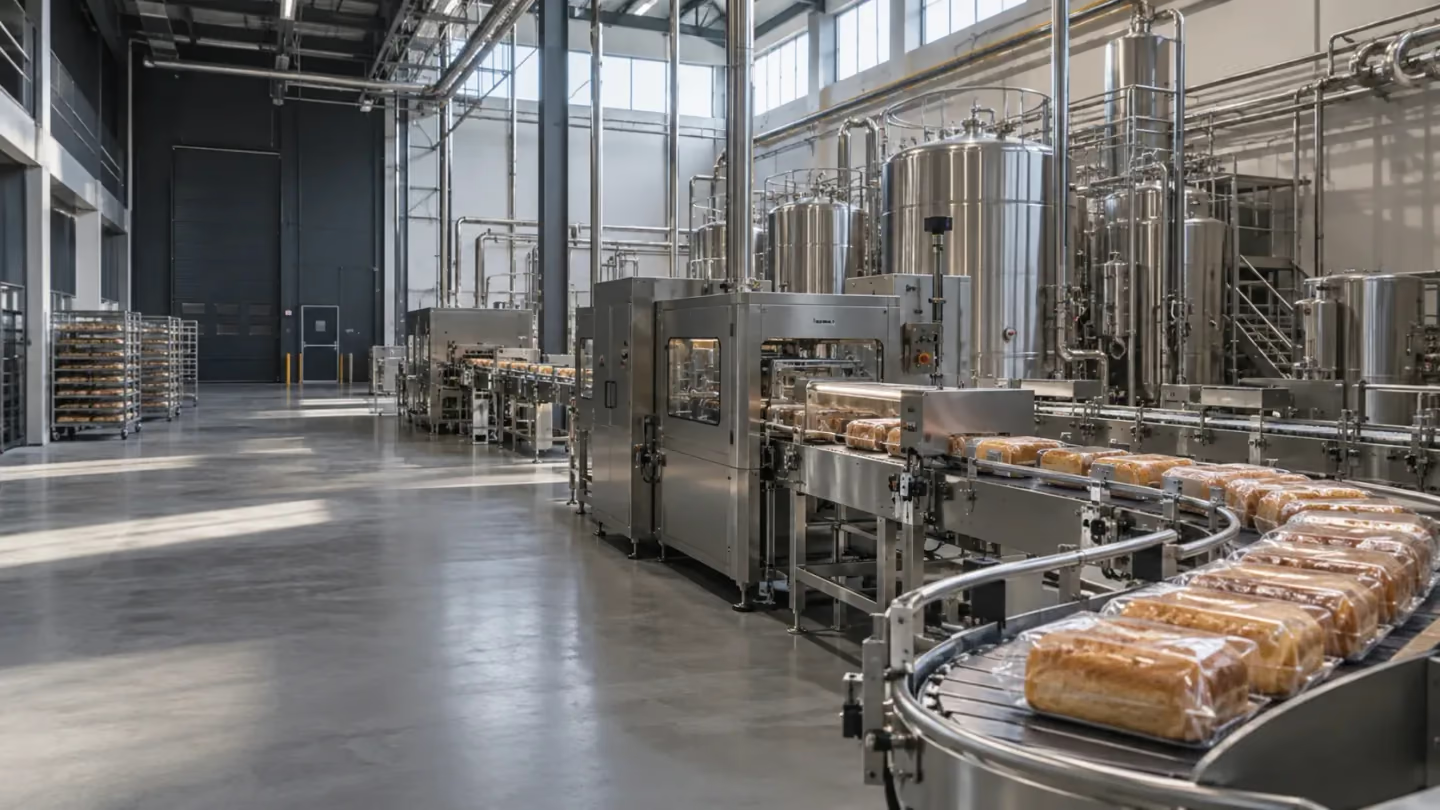
AI-generated illustration created for NextEdge Labs; it does not depict a client facility. Workflow diagram by NextEdge Labs. Icons from Lucide (ISC licence).