Returnable Glass Bottle (RGB) & Crate Deposit Accounting: Float Valuation, Washer Rejects, and Distributor Empties Reconciliation
For Sales operations leads and customer service managers · Compare approaches
TL;DR — what you’ll learn
- Standardize bottling line returnable glass bottle rgb crate deposit ledger around explicit lot, revision, and unit-of-measure checkpoints before automating ERP postings.
- Separate physical floor observations from commercial or quality release decisions so discrepancies remain visible.
- Route out-of-tolerance variances to a named owner with mandatory supporting evidence and timestamped sign-off.
- Reconcile physical counts, laboratory or inspection records, and financial ledgers at a shared cut-off.
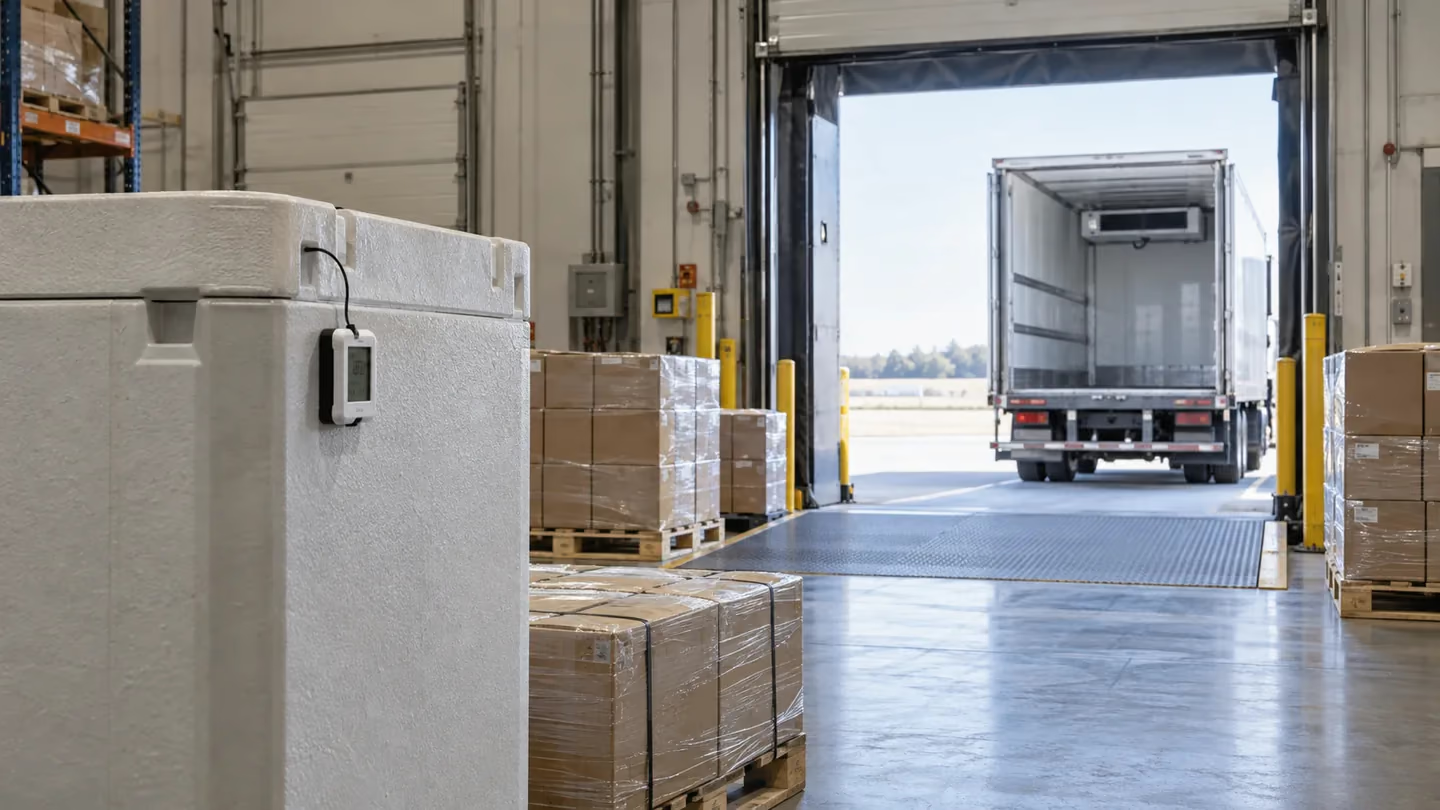
In food and beverage operations, bottling line returnable glass bottle rgb crate deposit ledger often fails when floor sheets, laboratory checks, and ERP entries record the same batch at different times or in different units. Separating physical observation from commercial or quality release keeps the stock ledger accurate and gives supervisors a clear exception queue.
How should food businesses govern bottling line returnable glass bottle rgb crate deposit ledger?
Standardize bottling line returnable glass bottle rgb crate deposit ledger around explicit lot, revision, and unit-of-measure checkpoints before automating ERP postings. Separate physical floor observations from commercial or quality release decisions so discrepancies remain visible.
- 01Capture batch contextLot, unit, timestamp and source reference
- 02Verify against rulesActive specification, tolerance and cut-off
- 03Reconcile variancesSeparate physical events from timing gapsDo the batch records and tolerances agree?YesApprove ledger postingNoKeep the disputed quantity in a visible hold status and route to the designated owner.
- 04Approve ledger postingRetain signed-off evidence and history
Illustrative information flow. The article explains the evidence, exceptions and responsible decisions. Diagram: NextEdge Labs.
1. The Capital Physics of Returnable Glass Bottle (RGB) & HDPE Shell Float Operations
In carbonated soft drink (CSD), mineral water, and commercial lager bottling plants across Latin America, Africa, Asia, and European hospitality channels, Returnable Glass Bottles (RGB) transported in 24-pocket injection-molded High-Density Polyethylene (HDPE) crates ("shells") remain the lowest-cost-per-serving packaging format—provided the glass float achieves its target trippage life of $20\text{ to }35\text{ turns}$ and the HDPE crate achieves $60\text{ to }100\text{ turns}$.
Look at the unit economics of a standard $300\text{ mL}$ returnable flint or amber glass bottle packed in a 24-pocket crate: Liquid Contents & Crown Cost: Treated carbonated beverage + sugar/syrup + steel crown cap + wet-glue paper label $\approx \$0.065\text{ per bottle}$ ($\$1.56\text{ per 24-bottle case}$). Container Replacement Cost: A new heavy-walled $300\text{ mL}$ returnable glass bottle ($260\text{ g}$ glass weight) costs $\$0.180\text{ per bottle}$ ($24 \times \$0.180 = \$4.32$), and the 24-pocket HDPE crate costs $\$3.68$, bringing the total returnable container replacement value to $\$8.00\text{ per case}$—more than $5\times$ the cost of the beverage inside!
When a beverage plant runs a fleet ("float") of $15\text{ million}$ bottles and $625,000\text{ crates}$, over $\$5.0\text{ million}$ of working capital sits in reusable packaging rotating between four physical zones: Unwashed Dirty Empties Yard (at the bottling plant) In-Line Bottle Washer & Filler WIP Filled Finished Goods Warehouse (bonded/unbonded full cases) Trade Float in Customer Hands (distributors, wholesalers, bars, and corner stores)
Scroll horizontally to see all columns.
| Operational Stage / Counter | Bottles ($\text{Units}$) | Crates ($\text{24-Pocket}$) | Variance / Reject Rate ($\%$) | Financial & ERP Inventory Posting |
|---|---|---|---|---|
| **1. Distributor Return Manifest (`DIST-402`)** | $48,000$ | $2,000$ | — | Claimed by driver on return waybill |
| **2. Vision Gate & Uncaser Net Good Receipt** | $44,450$ | $1,940$ | $-7.40\%$ bottles ($-2,520$ short, $-620$ foreign, $-410$ yard cullet) | Credit `DIST-402` Deposit Liability for $44,450\text{ bottles} + 1,940\text{ crates}$ ($\$8,325.00$); Debit `INV-RGB-DIRTY` |
| **3. New Glass & Crate Float Induction** | $+4,150\text{ new}$ | $+68\text{ new}$ | Float top-up from New Store | Transfer $4,150\text{ new bottles}$ ($\$747.00$) + $68\text{ new crates}$ ($\$250.24$) from `INV-NEW-PACK` to `ASSET-FLOAT-POOL` |
| **4. Total Bottle Washer Infeed** | $48,600$ | $2,008\text{ (Crate Washer)}$ | $100.00\%$ of Line Infeed | Issue $48,600\text{ dirty bottles}$ from `INV-RGB-DIRTY` to Work Order `WO-918` |
Source: GS1 · Lot identification and movement event records. Reference details
2. Dual-Valuation Architecture: Capitalized Float Asset Book Value vs. Refundable Deposit Liability
Under IFRS (IAS 16 Property, Plant and Equipment / IAS 2 Inventories) and US GAAP, multi-year returnable containers with a useful life exceeding 12 months and a controlled deposit/return mechanism must be accounted for using a Dual-Valuation Float Model:
Container Float Asset Ledger (Balance Sheet Asset / Amortized Pool): New glass bottles (MAT-RGB-300ML-NEW) and new HDPE crates (MAT-CRATE-24P-NEW) are purchased into a New Glass/Crate Buffer Store at landed purchase cost ($C_{\text{new, bottle}} = \$0.180$, $C_{\text{new, crate}} = \$3.68$). When new glass or crates are injected ("inducted") into the active bottling loop to expand capacity or replace breakage, they transfer into the Active Circulating Float Pool (ASSET-FLOAT-RGB-300ML), which is amortized over expected trippage/time (e.g., 36 to 48 months) and adjusted monthly for verified physical cullet breakage and trade write-offs. Customer Container Deposit Liability Ledger (Balance Sheet Current Liability): When $1,000\text{ full cases}$ are dispatched to Distributor DIST-402, the ERP generates a two-part billing document: Commercial Liquid Revenue: $1,000\text{ cases} \times \$6.50\text{ liquid price} = \$6,500$ (subject to VAT/Excise). Container Deposit Charge: $24,000\text{ bottles} \times \$0.10 + 1,000\text{ crates} \times \$2.00 = \$4,400$ credited to Refundable Container Deposit Liability (GL-214500) (exempt from VAT/Sales Tax in most jurisdictions unless formally forfeited as a deemed sale of packaging). Simultaneously, the ERP sub-ledger increments DIST-402's Physical Bailment Balance by $+24,000\text{ bottles}$ and $+1,000\text{ crates}$.
Source: Frappe / ERPNext · Material movement and reconciliation controls. Reference details
3. Reverse Logistics Receiving: Sorting Mixed Shells, Foreign Glass, and Unwashed Empties Yard Inventory
When Distributor DIST-402's flatbed truck arrives at the plant's Empties Yard gate with 40 pallets ($2,000\text{ crates}$) of returned empties, the physical receiving workflow cannot accept the driver's manifest at face value.
Automated Vision Gate & Uncaser Reconciliation
Modern bottling lines mount an overhead 3D machine-vision camera immediately after the empties depalletizer (before the uncaser/decrater). In less than $0.8\text{ seconds}$ per crate, the camera inspects all 24 pockets and classifies each pocket into four states: Proprietary Bottle Present (correct height, crown ring profile, and glass color) Empty Pocket (Short-Fill) Foreign / Competitor Bottle (wrong height, neck finish, or embossing) Inverted / Broken Neck Bottle
The ERP Empties Receiving Goods Receipt Note (GRN-EMPTIES) credits the distributor's bailment and deposit ledger only for net accepted proprietary bottles and sound proprietary crates:
$$\text{Accepted Proprietary Bottles} = N_{\text{gross\_pockets}} - N_{\text{empty\_pockets}} - N_{\text{foreign\_bottles}} - N_{\text{gross\_broken\_in\_crate}}$$
4. The Bottle Washer & Electronic Empty Bottle Inspector (EBI) Mass Balance
Once dirty proprietary bottles enter the Hydro-Soaker Bottle Washer, they undergo a rigorous $25\text{-to-}35\text{-minute}$ thermal and chemical cleaning cycle: Pre-Rinse & Pre-Warming Zone ($38^\circ\text{C} \rightarrow 55^\circ\text{C}$): Removes gross liquid heel, straws, and loose dirt while warming the glass gradually so thermal shock ($\Delta T \le 35^\circ\text{C}$) does not shatter cold bottles. Main Caustic Soak Tank ($78^\circ\text{C}\text{ to }84^\circ\text{C}$, $2.0\%\text{ to }2.8\%\text{ NaOH}$ + Chelating/Wetting Agents): Dissolves wet-glue paper labels, strips foil, saponifies residual oils, and achieves commercial sanitisation. Label Pulp Extraction & Post-Caustic Jetting ($60^\circ\text{C} \rightarrow 40^\circ\text{C}$) Fresh Water Final Rinse ($25^\circ\text{C}$, $0.0\%\text{ NaOH Carryover Verified via Phenolphthalein / Conductivity}$)
The Four In-Plant Glass Attrition Nodes
Between washer infeed (INV-RGB-300ML-DIRTY) and finished case packer outfeed (INV-FG-COLA-300ML), glass bottles are lost at four distinct engineering checkpoints that must be metered by high-speed photoelectric counters and cullet bin load cells:
Washer Thermal/Mechanical Breakage (LOSS-WASHER-CULLET): Bottles with micro-cracks from trade handling shatter inside the $82^\circ\text{C}$ caustic bath. Typical benchmark: $0.15\%$ to $0.35\%$ of washer infeed. (Excessive breakage $>0.50\%$ signals either thermal shock from a failed pre-warm zone or an aged glass float exceeding $35\text{ turns}$ with severe heel scuffing). Electronic Empty Bottle Inspector (LOSS-EBI-REJECT): Immediately after exiting the washer, every clean bottle passes through an EBI running base inspection, finish/crown-ring chip inspection, sidewall scuff inspection, residual caustic/liquid conductivity detection, and volatile organic compound (VOC) "sniffer" detection (which detects bottles that a consumer used to store kerosene, gasoline, or pesticides!). Washable Rejects (Re-Wash Loop): Bottles with a small piece of adhered paper label are diverted back to washer infeed via the re-wash accumulation table. Permanent Cullet / Sniffer Rejects: Bottles with chipped crown rings, glass inclusions, sidewall scuffing above maximum opacity, or positive VOC sniffer alarms are crushed immediately into Cullet Skip #2 so a contaminated or chipped bottle can never re-enter the float. Typical benchmark: $0.25\%$ to $0.60\%$. Filler Pedestal Burst (LOSS-FILLER-BURST): During counter-pressure filling at $3.8\text{ to }4.5\text{ bar g}$ $\text{CO}_2$ carbonation pressure, weakened bottles burst on the filling carousel, triggering an automatic high-pressure external glass-shower rinse across the two adjacent pedestals before filling resumes. Typical benchmark: $0.05\%$ to $0.12\%$. Crowner & Case Packer Breakage (LOSS-CROWNER-PACKER): Excessive top-load force at the steel crown crimper or misaligned drop fingers at the case packer. Typical benchmark: $0.03\%$ to $0.08\%$.
Summary
Reliable bottling line returnable glass bottle rgb crate deposit ledger depends on consistent lot identity, shared cut-off times, and explicit exception ownership across production, quality, and finance. When teams verify physical evidence before posting adjustments, both traceability and margin reporting remain defensible.
What to do next
- Audit one recent week of bottling line returnable glass bottle rgb crate deposit ledger transactions to identify unrecorded movements, unit mismatches, or late entries.
- Define the mandatory lot, unit, and approval fields required before an operator or integration can post a status change.
- Pilot the exception queue on one product line and review unresolved variances at a fixed daily cut-off.
Compare this workflow with your current setup
Share the step that takes the most manual work, the systems involved and the exceptions your team handles. That gives us a concrete starting point for comparing approaches.
Sources and further reading
Sources checked 15 October 2026. The worked examples and software evaluation suggestions are NextEdge Labs’ editorial analysis.
- GS1 Global Traceability StandardGS1 · Release 2.0, August 2017
Reference framework for identification and traceability data. Citing it does not imply that a proposed system is GS1 certified.
- Stock EntryFrappe / ERPNext · Online product documentation, accessed October 2026
Examples of distinct material receipt, issue, transfer and manufacturing transactions, including transit handling.
Visual credits
AI-generated illustration created for NextEdge Labs; it does not depict a client facility. Workflow diagram by NextEdge Labs. Icons from Lucide (ISC licence).