Used cooking oil (UCO) manifest records: reconcile fryer issues, food absorption, and biodiesel handovers
For Quality managers and laboratory leads · Compare approaches
TL;DR — what you’ll learn
- Separate fresh edible oil inventory, active fryer-vat holdover volume, product oil uptake, filter-cake solid waste, and quarantined Used Cooking Oil (UCO) drums in ERP records; never net spent oil collections directly against fresh oil purchase accounts.
- Reconcile closed-period UCO mass balance before signing off store or factory waste logs: net fryer oil consumed minus product oil absorption and filter-crumb losses must align within agreed tolerance against tamper-sealed UCO drum weights handed to authorised biodiesel aggregators.
- Record gross drum weight, verified container tare, and laboratory moisture/insoluble-impurities deductions (MIU) on every collector handover manifest so financial credit notes match dry-basis UCO quantity.
- Block unverified collector pickups when aggregator authorisation expires, drum seal numbers do not match fryer drain logs, or negative UCO mass variance exceeds site investigation thresholds.
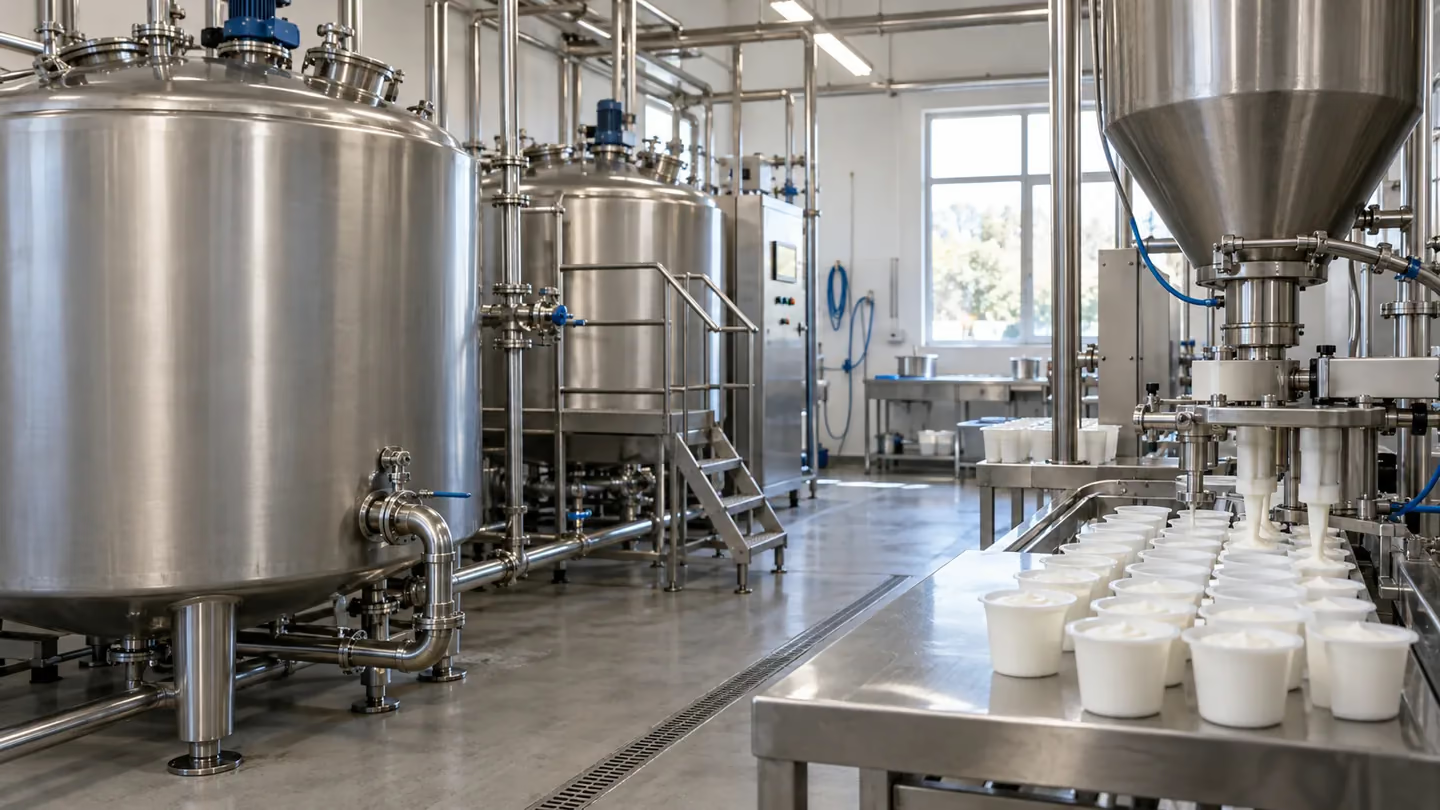
Quick-service restaurant (QSR) chains and industrial snack or par-fried food factories face a dual control problem with spent frying oil: proving to food-safety regulators that degraded oil never re-enters human food channels, and preventing unauthorized drum pilferage or inflated moisture deductions during biodiesel collector pickups. While FB-058 governs in-process Total Polar Material (TPM) discard triggers at the fryer vat, this guide (FB-128) addresses the closed-loop mass-balance and manifest reconciliation between fresh oil issued from stores, oil absorbed into finished food, filter-cake waste, and sealed UCO drums transferred to authorised biodiesel collectors under frameworks such as India's FSSAI Repurpose Used Cooking Oil (RUCO) ecosystem and EU Renewable Energy Directive (RED II) Annex IX Part B point-of-origin traceability rules.
How should QSR chains and food factories reconcile fryer oil top-ups against Used Cooking Oil (UCO) drum accumulations, authorised biodiesel aggregator manifests, and RUCO traceability?
Separate fresh edible oil inventory, active fryer-vat holdover volume, product oil uptake, filter-cake solid waste, and quarantined Used Cooking Oil (UCO) drums in ERP records; never net spent oil collections directly against fresh oil purchase accounts. Reconcile closed-period UCO mass balance before signing off store or factory waste logs: net fryer oil consumed minus product oil absorption and filter-crumb losses must align within agreed tolerance against tamper-sealed UCO drum weights handed to authorised biodiesel aggregators.
- 01Capture batch contextLot, unit, timestamp and source reference
- 02Verify against rulesActive specification, tolerance and cut-off
- 03Reconcile variancesSeparate physical events from timing gapsDo the batch records and tolerances agree?YesApprove ledger postingNoKeep the disputed quantity in a visible hold status and route to the designated owner.
- 04Approve ledger postingRetain signed-off evidence and history
Illustrative information flow. The article explains the evidence, exceptions and responsible decisions. Diagram: NextEdge Labs.
Scope and governance boundary
This article defines the ERP, warehouse, and store-operations record architecture for UCO mass-balance accounting and collector manifest verification:
What this workflow governs: Linking fresh oil issues (Stock Entry / POS consumption), fryer drain events, serialized UCO drum seals, collector license validity checks, wet-to-dry MIU (Moisture, Insolubles, Unsaponifiables) settlement deductions, and variance holds before closing period waste registers. What this workflow does not replace: It does not define fryer operating temperatures, chemical TPM analytical testing procedures, environmental hazardous-waste permitting, or statutory biofuel sustainability certification audits. Physical segregation of fresh and spent oil vessels must follow hygienic bulk-handling principles such as Codex Alimentarius CXC 36-1987.
Scroll horizontally to see all columns.
| Reconciliation Stage | Primary Record & Identifier | Denominator / Measurement Basis | Common Failure Mode | Mandatory ERP Control Gate |
|---|---|---|---|---|
| **1. Fryer Oil Input** | `Stock Entry` (Material Issue to Fryer Line) + Vat Dip Log | Kilograms ($\text{kg}$) at ambient temperature mass basis | Counting issued drums as consumed without deducting closing fryer vat holdover | Require period-end vat dip or flowmeter close before running UCO variance |
| **2. Food Oil Absorption** | Production Order / POS Sales Mix $\times$ SKU Oil Spec | Kilograms ($\text{kg}$) absorbed into sold/produced items | Using a single flat chain-wide oil-loss percentage across different product mixes | Maintain item-group oil absorption factors updated by QA lab fat-extraction audits |
| **3. Fryer Drain to Sealed Drum** | Fryer Drain Ticket + Serialized Tamper Seal ID | Gross $\text{kg} - \text{Tare kg} = \text{Net Wet UCO kg}$ | Unsealed open barrels allowing water ingress or unauthorized skimming | Require unique seal barcode scan when locking full UCO drum in waste bay |
| **4. Collector Handover Manifest** | RUCO / Biodiesel Chain-of-Custody Manifest | Net Wet $\text{kg} \times (1 - \text{MIU\%}) = \text{Dry Credited kg}$ | Collector deducts $>10\%$ water/sludge without retained sample evidence | Cap automated MIU deduction at contract limit unless backed by signed composite sample |
Source: GS1 · Lot identification and movement event records. Reference details
Why fresh-oil-to-UCO mass balance breaks down without stage denominators?
Many multi-site food operators track UCO only at the moment a recycling truck weighs drums at the back dock. That single-point record cannot detect whether 15% of drained fryer oil was diverted before reaching the storage drum, or whether a collector applied an arbitrary water-and-sludge deduction to reduce the payout credit.
A defensible ERP control model using standard inventory movements (such as ERPNext Stock Entry scrap and by-product transfers) separates five distinct physical quantities across each accounting period:
Net Fresh Oil Drained or Consumed ($M_{\text{net\_oil}}$): Opening oil held inside fryer vats plus fresh oil tins/bulk metered into fryers during the period, minus closing oil remaining in fryer vats at period cut-off. Product Oil Uptake ($M_{\text{uptake}}$): Oil absorbed by fried food output, calculated from verified production weight or POS item sales multiplied by each SKU's validated standard oil-pickup factor. Filter Cake, Crumb, and Skimming Solids ($M_{\text{crumb}}$): Weighed spent filter paper, diatomaceous earth/filter aid, and carbonized crumb traps removed during daily filtration. Gross and Net Wet UCO Drummed ($M_{\text{wet\_uco}}$): Sum of tamper-sealed UCO drums filled from fryer boil-out/drain lines, measured as gross scale weight minus verified drum tare weight. Dry Credited UCO Handover ($M_{\text{dry\_uco}}$): Net wet UCO handed to the authorised biodiesel aggregator minus verified free-water and sediment (MIU) deductions documented on the collection manifest.
Source: Frappe / ERPNext · Material movement and reconciliation controls. Reference details
Illustrative worked example: monthly frying-line UCO mass-balance reconciliation
Illustrative operating scenario with synthetic figures to demonstrate reconciliation arithmetic; not a client case study or universal yield benchmark.
Consider an industrial par-fried snack facility closing its 4-week accounting period for Frying Line 2. Plant finance and QA set an unexplained UCO mass-balance variance threshold of $\pm 4.0\%$ of expected recoverable liquid UCO before a collector manifest batch is cleared for settlement.
Step 2: Reconcile collector handover manifest and MIU deduction
During the period, the plant hands over 6 sealed UCO drums (DRUM-801 through DRUM-806) to an authorised biodiesel aggregator under manifest MAN-UCO-2026-10:
Gross weighed drum batch: $1,145.0\text{ kg}$ across 6 steel drums. Verified container tare: $6\text{ drums} \times 15.0\text{ kg/drum} = 90.0\text{ kg}$. Net wet UCO handed over ($M_{\text{wet\_uco}}$): $$M_{\text{wet\_uco}} = 1,145.0\text{ kg} - 90.0\text{ kg} = 1,055.0\text{ kg}$$ Moisture & insoluble impurities (MIU) deduction: The collector's composite sample records $3.962\%$ (rounded to $4.0\%$ contractual test band, or exactly $41.8\text{ kg}$ of free water and settled sediment from boil-out wash carryover): $$M_{\text{dry\_uco}} = 1,055.0\text{ kg} - 41.8\text{ kg} = 1,013.2\text{ kg}$$
Step 3: Evaluate mass-balance variance against the $\pm 4.0\%$ gate
$$\text{Wet Drum Variance vs Expected} = 1,055.0\text{ kg} - 1,068.0\text{ kg} = -13.0\text{ kg}\;(-1.22\%)$$
$$\text{Dry Credited UCO Variance vs Expected} = 1,013.2\text{ kg} - 1,068.0\text{ kg} = -54.8\text{ kg}\;(-5.13\%)$$
Because the wet drum accumulation ($-1.22\%$) is well within the $\pm 4.0\%$ physical mass-balance gate, the plant confirms that no unrecorded drum diversion occurred between the fryer drain and the waste bay. However, because the dry credited UCO variance reaches $-5.13\%$ due to the $41.8\text{ kg}$ water deduction, the ERP places manifest MAN-UCO-2026-10 on MIU_REVIEW_HOLD: sanitation supervisors must verify why boil-out wash water entered drum DRUM-804 during line cleaning, and QA must countersign the retained split sample before finance accepts the $41.8\text{ kg}$ deduction on the collector's credit note.
Bounded pilot and implementation check
Before rolling out automated UCO mass-balance reconciliation across all outlets or frying lines, validate the workflow in a 4-week single-site pilot:
Pilot scope: One high-volume frying line or two QSR outlets, tracking all fresh oil receipts, daily filtration crumb weights, sealed UCO drums, and one scheduled biodiesel collector pickup. Baseline capture: Record 4 prior weeks of fresh oil purchases, historical UCO pickup weights, and any unrecorded water/tare deductions. Acceptance criteria: 100% of filled UCO drums carry linked tamper-seal IDs and tare-verified net weights; closed-period wet UCO mass balance reconciles within $\pm 4.0\%$ after accounting for validated product absorption and filter cake; collector credit notes match dry UCO formula outputs without manual spreadsheet overrides. Stop and recovery rule: If product oil-absorption factors drift because of unrecorded recipe changes or unweighed filter-cake disposal, pause automated variance holds and recalibrate SKU uptake factors with QA laboratory Soxhlet/NIR fat measurements.
Summary
Reliable used cooking oil uco biodiesel collection manifest reconciliation depends on consistent lot identity, shared cut-off times, and explicit exception ownership across production, quality, and finance. When teams verify physical evidence before posting adjustments, both traceability and margin reporting remain defensible.
What to do next
- Audit one recent week of used cooking oil uco biodiesel collection manifest reconciliation transactions to identify unrecorded movements, unit mismatches, or late entries.
- Define the mandatory lot, unit, and approval fields required before an operator or integration can post a status change.
- Pilot the exception queue on one product line and review unresolved variances at a fixed daily cut-off.
Compare this workflow with your current setup
Share the step that takes the most manual work, the systems involved and the exceptions your team handles. That gives us a concrete starting point for comparing approaches.
Sources and further reading
Sources checked 15 October 2026. The worked examples and software evaluation suggestions are NextEdge Labs’ editorial analysis.
- GS1 Global Traceability StandardGS1 · Release 2.0, August 2017
Reference framework for identification and traceability data. Citing it does not imply that a proposed system is GS1 certified.
- Stock EntryFrappe / ERPNext · Online product documentation, accessed October 2026
Examples of distinct material receipt, issue, transfer and manufacturing transactions, including transit handling.
Visual credits
AI-generated illustration created for NextEdge Labs; it does not depict a client facility. Workflow diagram by NextEdge Labs. Icons from Lucide (ISC licence).