SAP AP controls for food receipts: separate parking, posting and payment release
For Inventory managers and supply-chain heads · Plan implementation
TL;DR — what you’ll learn
- A parked invoice and a posted invoice blocked for payment represent different financial states. A payment block does not mean posting never occurred.
- Connect lab evidence and weighbridge quantity to the applicable purchase agreement before proposing a commodity-price adjustment.
- Keep quality disposition, commercial deduction approval, invoice posting and payment release as separate authorities.
- Pilot the installed SAP edition/version and configured workflow in a sandbox; transaction names alone do not establish an approval control.
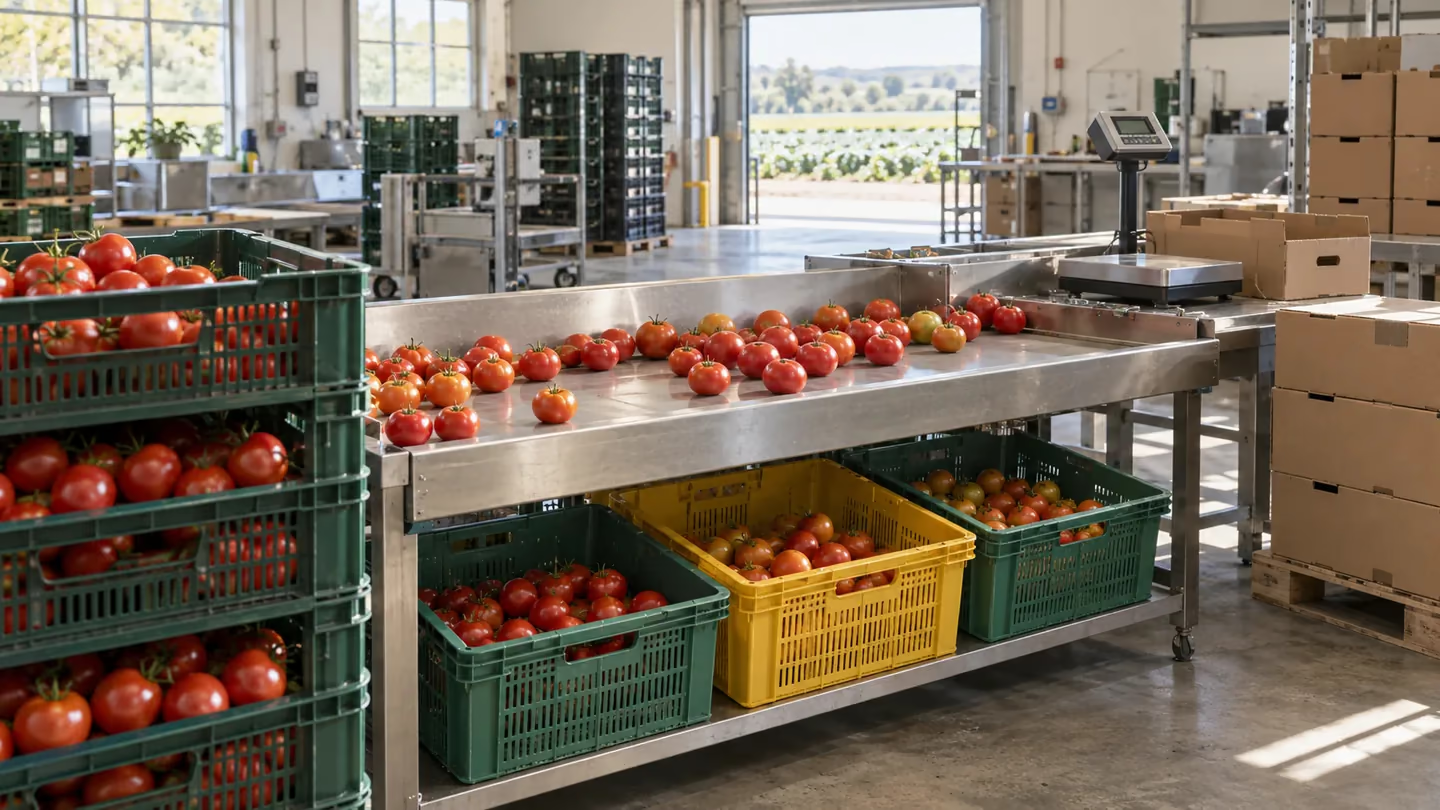
A food processor records a raw-material receipt before its final lab evidence reaches AP. The supplier bills at the base contract rate, while procurement expects a quality-linked adjustment. One team says to park the invoice; another assumes posting with a payment block has the same effect. Finance needs an explicit state and authority decision before either route becomes a routine interface action.
How should food and beverage processors configure SAP AP invoice park-and-post release workflows (MIR7/MIRO blocking reasons) when raw-material receipts depend on post-GRN lab moisture/fat potency deductions?
A parked invoice and a posted invoice blocked for payment represent different financial states. A payment block does not mean posting never occurred. Connect lab evidence and weighbridge quantity to the applicable purchase agreement before proposing a commodity-price adjustment.
- 01Capture batch contextLot, unit, timestamp and source reference
- 02Verify against rulesActive specification, tolerance and cut-off
- 03Reconcile variancesSeparate physical events from timing gapsDo the batch records and tolerances agree?YesApprove ledger postingNoKeep the disputed quantity in a visible hold status and route to the designated owner.
- 04Approve ledger postingRetain signed-off evidence and history
Illustrative information flow. The article explains the evidence, exceptions and responsible decisions. Diagram: NextEdge Labs.
Understand the states before selecting the workflow
SAP's published document-parking material describes parking an invoice for later posting and associates MIR7 with invoice parking. Its blocking documentation describes invoices that can be posted but blocked for payment. These states must not be collapsed into “invoice held”. SAP Parking of Documents, Blocking Invoices.
SAP's S/4HANA learning material also distinguishes variance-related release from manual header payment blocks; it describes cases where automatic variance release does not clear a manual header block. That is a reason to inspect the actual block and workflow, not to assume a quality decision releases every financial restriction. No universal R/Q/P key mapping or cross-edition behaviour is asserted here. SAP blocked-invoice release lesson.
Where a company permits recognition before the commercial dispute is settled, finance determines that treatment. Where evidence is required before posting, a payment block alone cannot enforce that policy. The integration must represent the actual decision, not choose an accounting treatment from a lab status.
Scroll horizontally to see all columns.
| Decision | Evidence to retain | Authority |
|---|---|---|
| Physical receipt | Goods-receipt identity, net quantity/unit, weighbridge references and lot links | Receiving/materials owner |
| Quality disposition | Applicable specification, test/report revision and authorised result | Qualified quality owner |
| Commercial adjustment | Contract/version, calculation basis, proposed deduction and supplier resolution where required | Procurement/commercial and finance owners |
| Invoice posting | Exact reviewed invoice version, accounting/tax evidence and approvals | Authorised finance workflow |
Source: GS1 · Lot identification and movement event records. Reference details
Worked example: a commercial proposal changes value, not the physical receipt
All figures and contract decisions below are illustrative. Assume one supplier, lot, currency and invoice, before tax. Gross weighbridge quantity is 12,000 kg and tare is 2,000 kg, producing 10,000 kg net. The fixture assumes those readings have already passed the responsible owner's checks; no weighing or calibration method is supplied.
At INR 30/kg, the supplier claims 10,000 × 30 = INR 300,000. After the relevant lab evidence is available, the commercial reviewer supplies a proposed 2% invoice-value adjustment under the fixture's declared contract. This is an invented commercial term, not a moisture/fat formula, safety limit or industry standard.
The proposal is 300,000 × 0.02 = INR 6,000, leaving a comparison amount of INR 294,000. Its effective rate is 294,000 ÷ 10,000 = INR 29.40/kg. Physical net receipt remains 10,000 kg. Changing the receipt to 9,800 kg to make the base-rate multiplication agree would corrupt the quantity record.
Source: Frappe / ERPNext · Material movement and reconciliation controls. Reference details
Connect the evidence to the exact invoice version
Use supplier/entity, invoice number and source version, PO/release/item, GR and weighbridge ticket IDs, lot and lab/report revision, contract/pricing version, proposal ID and SAP document references. Store received time separately from the evidence's effective event time. Record whether the target document is parked, posted, payment-blocked or released according to the installed workflow's actual fields.
Keep the proposal and authorised decision separate. Uploading a report grants no right to post or remove a payment restriction. The quality owner decides product disposition; procurement verifies the commercial basis; finance approves recognition, tax and payment controls. The system owner validates mapping and acknowledgement without gaining those business permissions.
Do not reuse an approval after changing invoice lines or the adjustment calculation. A revised proposal needs an impact decision against the current invoice version. If the invoice is already posted, use the finance-approved correction/credit process; parking another copy does not reverse the existing document.
Failure cases for the SAP sandbox
One lab result covers several receipts. Preserve the authorised lot/receipt applicability. Do not allocate a deduction across unrelated GRs simply because the supplier matches.
The invoice arrives twice. Link source receipts to one accepted invoice identity. A timed-out create request requires target lookup by source reference before retry, so one invoice cannot become two parked documents.
Tare is corrected after posting. Retain the original and revised weighbridge evidence. Route quantity, commercial and financial impacts separately to the responsible owners. Do not overwrite the GR or posted value from the external workspace.
Bound the pilot around evidence and authority
Use one plant, supplier/commodity contract and SAP deployment/version in a sandbox. Inputs are redacted or synthetic invoices, PO/GR data, weighbridge references, lab evidence, contract calculations, configured posting/payment states and role permissions. Keep live posting and payment outside the initial pilot.
Baseline invoices lacking complete evidence, unresolved proposed deductions, manual review time and target-state mismatches. Compare native document parking/workflow configuration with a lab-to-AP evidence integration; add a bounded proposal workspace only if the existing tools cannot present the required links. AI may assist with cited extraction, but deterministic arithmetic and authorised reviewers control the adjustment.
Proposed exit criteria include reproducing 10,000 kg, INR 300,000, INR 6,000 and INR 294,000; preserving the physical quantity; preventing duplicate invoice creation; proving a parked-versus-posted distinction; and demonstrating that unresolved payment restrictions remain in place. Test rejected/amended evidence, partial receipt applicability, changed proposals and outage replay. The SAP functional, quality, procurement and finance owners must accept the installed-state mapping and permissions before any write scope expands. No implementation has passed these checks here.
Make “held” a precise financial state
Food-receipt AP control works when the team can identify what is awaiting evidence, what has been posted and what remains restricted for payment. Linking the approved lab and commercial decisions to those exact states prevents a convenient status label from concealing an accounting decision.
Identify the installed SAP edition/version and map its actual parked, posted and payment-restriction states. Connect one commodity invoice to its GR, weighbridge, lab and contract references. Separate proposed value adjustments from physical quantities and authorised finance decisions. Prove permissions, unresolved-block handling and recovery in the bounded sandbox before approving production writes.
Summary
Reliable food erp sap ap invoice park post release controls depends on consistent lot identity, shared cut-off times, and explicit exception ownership across production, quality, and finance. When teams verify physical evidence before posting adjustments, both traceability and margin reporting remain defensible.
What to do next
- Audit one recent week of food erp sap ap invoice park post release controls transactions to identify unrecorded movements, unit mismatches, or late entries.
- Define the mandatory lot, unit, and approval fields required before an operator or integration can post a status change.
- Pilot the exception queue on one product line and review unresolved variances at a fixed daily cut-off.
Scope this automation around your operation
Tell us your current systems, transaction volume and the exception you need to resolve. We can discuss a focused first release, its review controls and how to measure the result.
Sources and further reading
Sources checked 15 October 2026. The worked examples and software evaluation suggestions are NextEdge Labs’ editorial analysis.
- GS1 Global Traceability StandardGS1 · Release 2.0, August 2017
Reference framework for identification and traceability data. Citing it does not imply that a proposed system is GS1 certified.
- Stock EntryFrappe / ERPNext · Online product documentation, accessed October 2026
Examples of distinct material receipt, issue, transfer and manufacturing transactions, including transit handling.
Visual credits
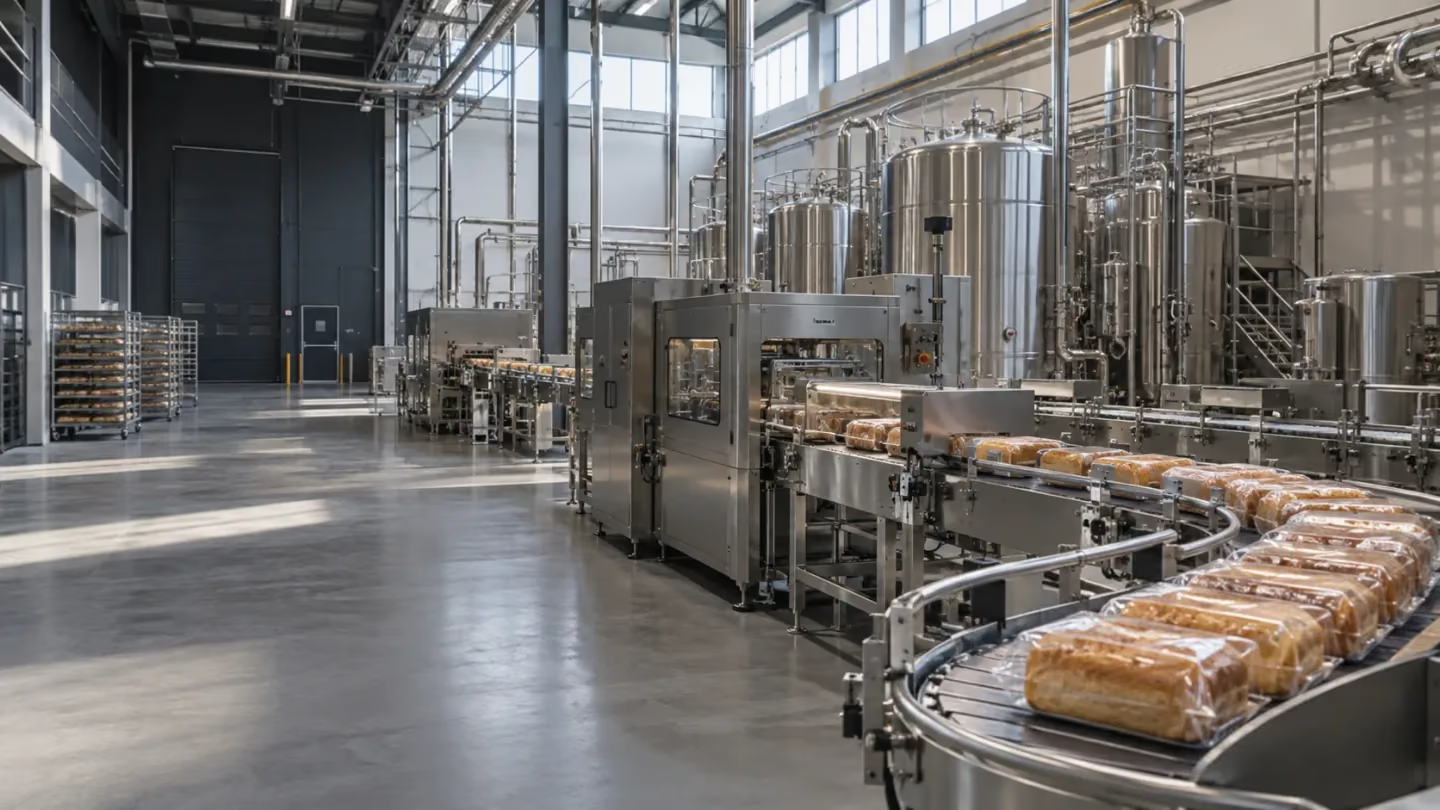
AI-generated illustration created for NextEdge Labs; it does not depict a client facility. Workflow diagram by NextEdge Labs. Icons from Lucide (ISC licence).