Chocolate batch traceability: retain tank heels, process evidence and rework decisions
For Plant heads, production planners and manufacturing managers · Compare approaches
TL;DR — what you’ll learn
- A new tank addition does not erase the material already present. Preserve the heel and every contributing lot in the genealogy.
- A weighted composition calculation needs compatible assays and a declared model. It does not prove physical uniformity, product conformity or allergen safety.
- Link recipe, conching/tempering log and cleaning/line-change evidence to the actual material scope and authorised quality decision.
- Keep nut/milk rework eligibility and labelling with the qualified food-quality owner; a small calculated carryover is not automatic clearance.
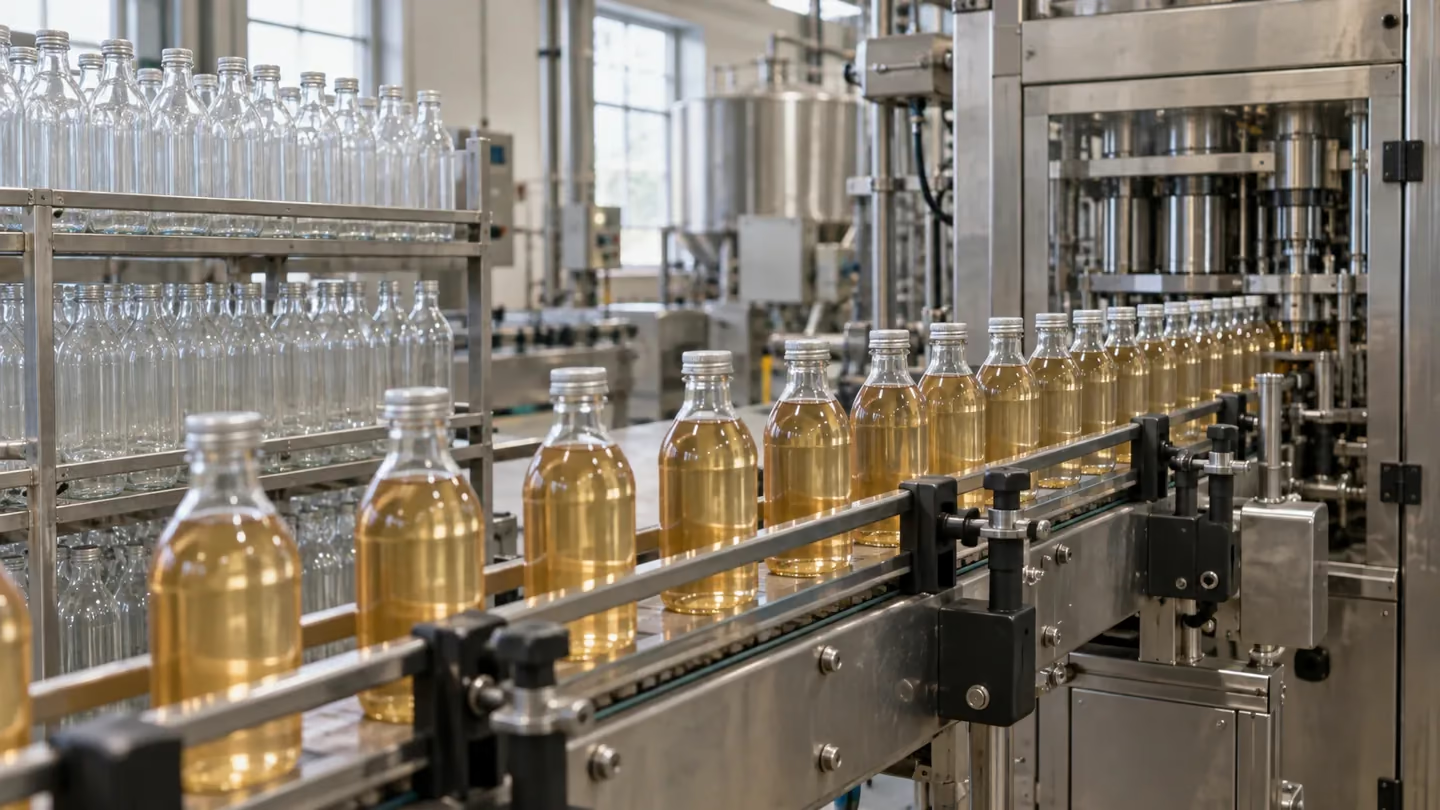
A chocolate tank receives a new batch while retaining a heel from the previous one. The ERP assigns the new batch number to the full tank and drops the old lot. Later, a reviewer investigates rework and cannot identify which outputs may include the earlier material.
How should chocolate and compound-coating manufacturers track cocoa-butter fat-percentage standardization, conching/tempering cycle logs, warm liquid-mass tank heel genealogy, and nut/milk allergen rework segregation?
A new tank addition does not erase the material already present. Preserve the heel and every contributing lot in the genealogy. A weighted composition calculation needs compatible assays and a declared model. It does not prove physical uniformity, product conformity or allergen safety.
- 01Capture batch contextLot, unit, timestamp and source reference
- 02Verify against rulesActive specification, tolerance and cut-off
- 03Reconcile variancesSeparate physical events from timing gapsDo the batch records and tolerances agree?YesApprove ledger postingNoKeep the disputed quantity in a visible hold status and route to the designated owner.
- 04Approve ledger postingRetain signed-off evidence and history
Illustrative information flow. The article explains the evidence, exceptions and responsible decisions. Diagram: NextEdge Labs.
Keep the material identity separate from the displayed batch name
For this workflow, a tank heel is the material remaining when the next addition occurs. Record its measured or approved estimated mass, provenance and status. If the amount is uncertain, keep that uncertainty and the responsible owner's decision visible; do not enter zero to make a new batch start cleanly.
The official indexed Codex catalogue identifies CXC 80-2020, its Code of Practice on Food Allergen Management for Food Business Operators. The code addresses allergen management across the food chain. It provides context for a controlled allergen/rework process, not a universal allergen threshold, cleaning recipe or permission to blend one product into another.
Qualified owners must confirm the applicable revision, market requirements and validated site controls. Codex codes catalogue, CXC 80.
Scroll horizontally to see all columns.
| Contributor in the resulting 1,000 kg | Modelled mass | Modelled share |
|---|---|---|
| A, retained through the heel | 50 kg | 5% |
| B, retained through the heel | 200 kg | 20% |
| C, new addition | 750 kg | 75% |
| Total | 1,000 kg | 100% |
Source: GS1 · Lot identification and movement event records. Reference details
Worked example: the old lot remains after a second addition
The figures are illustrative. Assume a theoretical perfectly mixed tank, no unrecorded losses, compatible mass units and no assay change during the example. These assumptions make the arithmetic reproducible; they do not establish that a real tank mixes uniformly or that the calculated shares are analytically verified.
The tank contains a 200 kg heel from lot A. An 800 kg addition from lot B creates 1,000 kg. Under the model, A contributes 20% and B 80%.
A 750 kg withdrawal therefore contains calculated contributions of 150 kg A and 600 kg B. The remaining 250 kg contains 50 kg A and 200 kg B.
Source: Frappe / ERPNext · Material movement and reconciliation controls. Reference details
Link four evidence sets to every affected output
Logs should identify the approved process and actual evidence without turning the article into an operating procedure. A completed cycle label does not by itself demonstrate that every required parameter or verification was acceptable. Cleaning method selection and validation remain with the plant's qualified owners; no dry/wet cleaning instruction is proposed here.
Preserve the rework's contributing genealogy, not just its latest container ID. If a milk- or nut-containing contributor exists, the relevant quality/label review must consider that provenance under the applicable controls. Arithmetic dilution does not authorise a different allergen claim. Do not let AI infer compatibility from a recipe name or an image.
Resolve uncertain and changing records explicitly
A heel estimate is corrected. Keep the original and revised value, method/reference and authorised reason. Identify affected withdrawals and downstream lots; do not quietly recalculate a previously accepted genealogy.
A withdrawal lacks timing or quantity evidence. Retain an unresolved material balance and the potential contributor scope for owner review. Avoid fabricating precise batch fractions from a production calendar alone.
A rework decision is rejected. Keep its stock/status and proposed destination visible. A later approved use requires its own reference and actual consumption event; a proposal cannot become consumption during an import.
Compare genealogy controls before adding a new application
A controlled tank/rework ledger may suffice for a small flow. Configure existing ERP/MES batch records when they support heels, multiple contributors and approved dispositions. Integrate process/lab references when they intentionally live elsewhere. Build a bounded review workspace only for an identified gap in reconstructing contributor scope or decisions.
Use deterministic mass and version checks. AI may locate cited log references for a reviewer, but cannot create process values, certify uniformity or approve rework.
Assess one tank/product family in shadow mode with synthetic or authorised minimised records. Baseline unknown heels, missing contributor links and unapproved rework destinations. Observable acceptance includes reproducing the 150/600 kg withdrawal, 50/200/750 kg contributor bridge and 310 kg/31% composition check with its distinct basis.
Keep every contributor available to the next reviewer
Chocolate traceability is stronger when a tank's changing contents remain visible through additions, withdrawals and rework. A useful ledger explains contributor scope and the approvals behind use; a neat batch label cannot supply either by itself.
Map one tank's heel, addition, withdrawal and rework identities with production and quality. Record the approved mass/assay basis and mark any uncertain contributor or quantity explicitly. Connect recipe, process and cleaning evidence to authorised rework and output decisions. Test corrected heels and downstream traceability before accepting a new genealogy control.
Summary
Reliable chocolate conching tempering rework batch traceability depends on consistent lot identity, shared cut-off times, and explicit exception ownership across production, quality, and finance. When teams verify physical evidence before posting adjustments, both traceability and margin reporting remain defensible.
What to do next
- Audit one recent week of chocolate conching tempering rework batch traceability transactions to identify unrecorded movements, unit mismatches, or late entries.
- Define the mandatory lot, unit, and approval fields required before an operator or integration can post a status change.
- Pilot the exception queue on one product line and review unresolved variances at a fixed daily cut-off.
Compare this workflow with your current setup
Share the step that takes the most manual work, the systems involved and the exceptions your team handles. That gives us a concrete starting point for comparing approaches.
Sources and further reading
Sources checked 15 October 2026. The worked examples and software evaluation suggestions are NextEdge Labs’ editorial analysis.
- GS1 Global Traceability StandardGS1 · Release 2.0, August 2017
Reference framework for identification and traceability data. Citing it does not imply that a proposed system is GS1 certified.
- Stock EntryFrappe / ERPNext · Online product documentation, accessed October 2026
Examples of distinct material receipt, issue, transfer and manufacturing transactions, including transit handling.
Visual credits
AI-generated illustration created for NextEdge Labs; it does not depict a client facility. Workflow diagram by NextEdge Labs. Icons from Lucide (ISC licence).